
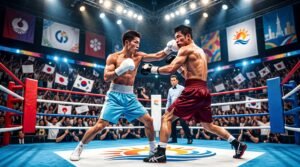
5 Mainstream Boxing Styles Explained: Why Soviet & Cuban Rule the Olympics|Chan Ka Wa Boxing
Looking for a quick answer? Here is a summary of the world’s 5 mainstream boxing styles:
American Style: Focuses on ultimate defensive counter-punching (e.g., Floyd Mayweather)
Mexican Style: Focuses on fearless, aggressive forward pressure (e.g., Canelo Álvarez)
Soviet/Russian Style: Focuses on scientific distance control and the pendulum step (e.g., Vasyl Lomachenko)
Cuban Style: Focuses on extreme evasion, fluid rhythm, and lateral movement (e.g., Guillermo Rigondeaux)
Japanese Style: A deadly hybrid of solid fundamentals and high-pressure combinations (e.g., Naoya Inoue)
While American and Mexican styles historically dominate professional boxing, the Soviet and Cuban systems rule Olympic amateur boxing because their scientific “hit-and-move” philosophies are perfectly optimized for the Olympic point-scoring system.
(Read my previous article here: The Real Differences Between Professional and Olympic Boxing)
Today, let’s deconstruct the 5 mainstream boxing styles in the world. What are their differences? And based on your personality and physique, which style suits you best? Let’s decode it!
1. Traditional American Style: The Ultimate Defensive Counter-Punching
- Representatives: Floyd Mayweather, James Toney (Note: Mike Tyson has his unique Peek-a-boo style).
- Signature Moves: Shoulder Roll (Philly Shell), Pull Counter.
- Core Philosophy: Bred in the soil of freedom and capitalism, the American system has produced countless professional champions. This style heavily relies on defensive counter-punching. Fighters use elite reflexes and head movement to slip attacks and deliver devastating counters the moment their opponent misses.
- Olympic Disadvantage: While dominant in the pro scene, the traditional American style is often deemed “too passive” by judges in the point-centric Olympic system. This caused a gold medal drought for USA Boxing (only 2 golds from 2008 to 2024). However, preparing for LA 2028, the US team has adapted and recently climbed to 3rd in the 2026 World Boxing U19 rankings.
2. Mexican Style: The Fearless Iron Warriors
- Representatives: Julio César Chávez, Canelo Álvarez.
- Signature Moves: Liver Shot, Slipping and Rolling on the inside.
- Core Philosophy: Extremely aggressive! Mexican fighters love constant forward pressure and inside fighting, giving their opponents zero room to breathe. They are known for their toughness and a “never step back” warrior spirit.
- Olympic Disadvantage: Mexico is a true boxing powerhouse, producing over 150 pro world champions. But in the Olympics, marching forward to trade blows means you easily get tagged by light, fast jabs, losing crucial points. Consequently, Mexico has only secured 14 Olympic medals in history.
3. Soviet/Russian Style: The Precision State Machine
- Representatives: Vasyl Lomachenko, Dmitry Bivol.
- Signature Moves: Pendulum Step, In-and-Out Jab/Hook variations.
- Core Philosophy: During the Cold War, the Soviet Union treated boxing as a state machine to demonstrate national power. This system was designed specifically for Olympic boxing, emphasizing extreme scientific training. They master mid-to-long range control using the pendulum step, striking the opponent and immediately bouncing back to a safe distance.
- Olympic Dominance: In the fast-paced 3-round (9-minute) Olympic format, the agile pendulum step is highly advantageous for scoring and defending. This allowed the Soviet/Russian system to sweep massive medal hauls between 1952 and 2020. However, in a 12-round pro fight, this bouncy footwork consumes a massive amount of stamina.
4. Cuban Style: Ghosts in the Ring
- Representatives: Guillermo Rigondeaux, Andy Cruz.
- Signature Moves: Check Hook, Fluid lateral movement.
- Core Philosophy: Cuba originally banned professional boxing, pouring all national resources into Olympic glory. The Cuban style combines the scientific framework of the Soviet system with Caribbean agility. It is highly rhythmic, featuring constant lateral movement and extreme evasions.
- Olympic Dominance: Their unpredictable movement makes them incredibly hard to hit, allowing Cuba to win a staggering 80 Olympic boxing medals. This system is so successful that many countries (like India and China) hire Cuban coaches to elevate their national teams.
5. Japanese Style: The Practical and Lethal Assassins
- Representatives: Ryōta Murata, Naoya Inoue.
- Signature Moves: Multi-angle combinations, Pinpoint precision striking.
- Core Philosophy: The Japanese style is a beautiful hybrid. It incorporates Soviet/Cuban agile footwork while maintaining Mexican-style toughness and body-snatching abilities. They emphasize strict discipline and practical, lethal strikes without unnecessary flashiness. They excel in both pro and amateur rings (e.g., ranked 6th in Tokyo 2020 Olympics).
How to Find Your Personal Boxing Style?
After understanding the big five, you might ask: “Which one should I choose?” Before labeling yourself, remember these tips from a coach:
Don’t label yourself too early: Finding your style takes time.
Master the fundamentals first: Build a solid foundation in your jab, footwork, and basic defense before adopting a specific flair.
Listen to your body: Choose tendencies that fit your height, reach, and natural athleticism.
Discover through sparring: After getting hit and hitting back, you will naturally realize if you prefer “aggressive pressure” or “counter-punching.”
Communicate with your coach: A coach provides an objective view of your strengths and weaknesses.
(Want to learn how to improve faster? Read this: [Is 24 Too Late to Start Boxing? The Science of Talent vs. Deliberate Practice])
⏱️ 1-Second Self-Test: What is your fighting brain?
Use this Boxing Style Quadrant to find your natural tendency:
Efficiency × Aggressive Pressure 👉 Japanese Style (e.g., Inoue)
High Volume × Aggressive Pressure 👉 Mexican Style (e.g., Canelo)
Efficiency × Counter-Attack 👉 American / Cuban Style (e.g., Mayweather, Rigondeaux)
High Volume × Counter-Attack 👉 Soviet / Russian Style (e.g., Lomachenko, Bivol)
Conclusion: Adaptability is the Ultimate Style
There is no “superior” style, only adaptability. The Cuban and Soviet systems simply align better with Olympic scoring rules, which is why elite amateur boxers look so similar. For most amateur enthusiasts or even pro fighters, the best approach is to blend these philosophies into a unique style of your own.
If you are looking for a highly efficient, scientific training system that minimizes injury risk while maximizing real-world application:
🥊 Welcome to Chan Ka Wa Boxing! Experience the Soviet Scientific Boxing System. Whether your goal is to lose weight, relieve stress, or step into the ring, we start from the fundamentals to help you forge your ultimate boxing style.
👉 [Click Here to WhatsApp Us and Book Your 1-on-1 Trial Class Now]

【Boxing Analysis】2026 Asian Games Boxing Recap: A Former Olympian Breaks Down India’s Rise & Tactical Shifts
The 2026 Asian Games boxing tournament in Aichi-Nagoya just concluded! A former HK Olympic coach analyzes India’s shocking dominance, the decoding of Central Asian footwork, and Lin Yu-ting’s masterclass in distance control.
【Boxing News】Youth Olympic Boxing Decoded! HK Prospect Chan Yik Kan Heads to Africa
How brutal is Youth Olympic Boxing? A former Hong Kong Olympic representative breaks down the U19 World Boxing Championships and previews CKW Boxing prospect Chan Yik Kan’s upcoming expedition to Africa.
【Boxing Analysis】Why Did Cuban Boxing Decline? A Former Olympian Breaks Down 4 Brutal Truths
Once the untouchable gods of Olympic boxing, why has Cuba fallen from grace? A former Hong Kong Olympic representative analyzes the 4 brutal truths behind the decline of Cuban boxing, from scoring system changes to the rise of Central Asian fighters.

【Coach’s Column】Is Boxing Violent? Former Olympian Explains 3 Reasons Why Boxing is the Best “Antidote” for SEN Children!
Many parents think boxing is violent, but for SEN children (ADHD, Autism), it’s a miracle sport for training focus and emotional control! A former Hong Kong Olympic representative explains how padwork, footwork, and discipline rebuild confidence and coordination in kids with Special Educational Needs.
【Boxing Science】How to KO in Boxing? Former Olympian Unlocks 3 Essential Rules
Want to know how to KO in boxing? A former Olympic coach breaks down the science of knockouts, the kinetic chain, timing, and why headhunting gets you KO’d.
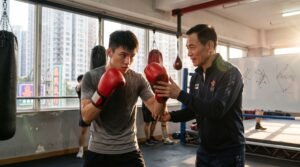
【Coach’s Column】Want to Learn Boxing But Afraid to Take the First Step? A Former Olympian Breaks Down 4 Mental Barriers and Prep Tips for Boxing Beginners
Want to learn boxing but worried about your fitness, coordination, or getting hurt? A former Hong Kong Olympic coach breaks down the 4 biggest mental barriers for boxing beginners and explains how to take your first step safely.