
[Boxing Beginner's Guide] A Must-Read for Newbies: Self-Taught boxing or Gym? The Golden Steps from Zero to the Ring
Many readers have messaged me asking, “Coach, I want to learn boxing, but I don’t know where to start!” or “Can I just learn by watching YouTube videos?”
As a former Hong Kong Boxing Team coach and someone who has navigated major boxing gyms for years, I’ve seen too many beginners take the wrong first step. Not only do they waste money, but they also end up leaving the sport with injuries and terrible muscle memory. In this article, we aren’t just going to talk about passion; we are going to break down the most realistic “Beginner’s Boxing Roadmap” from a core technical perspective and the business logic of the boxing industry.
Whether you want to pursue the ultimate striking art of elite fighters or simply burn fat through high-intensity training, this ultimate guide will be the only article you need to read before stepping into a boxing gym.
💡 Advanced Reading: If you already have a basic understanding of boxing and want to know what competitions are available in Hong Kong, check this out: 👉 HK Boxing Competition Guide: Want to Fight? Former HK Team Coach Breaks Down 3 Amateur Boxing Tiers & BAHK Entry Rules
The Biggest Myth: Is Self-Taught Boxing Actually Feasible for Beginners?
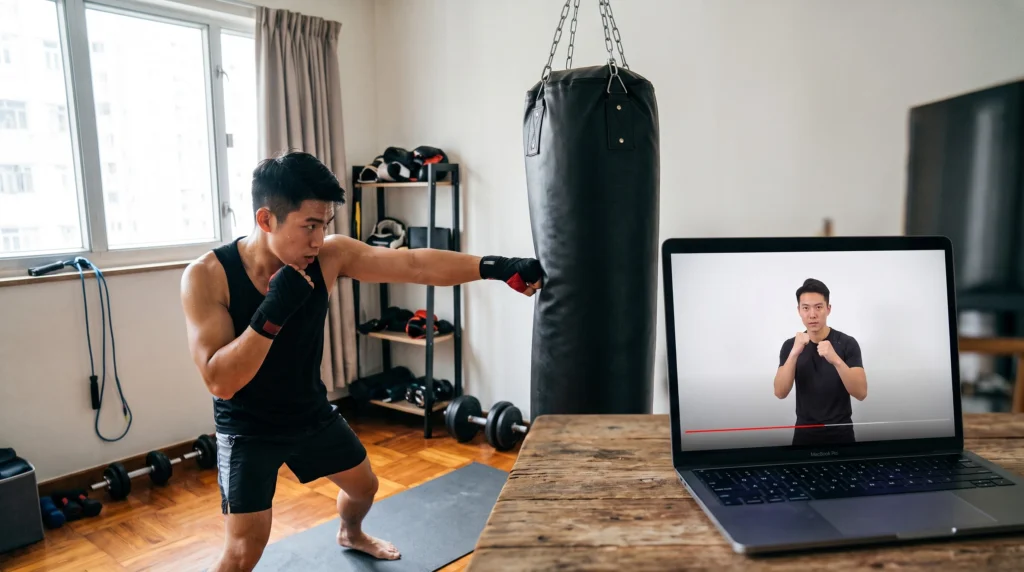
To bait clicks and traffic, many content farms will tell you that “you can train to move like a pro boxer at home.” As a responsible coach, my answer is extremely direct: I absolutely do not recommend that complete beginners with zero foundation teach themselves boxing.
Boxing is a science that heavily emphasizes the “Kinetic Chain” and “micro-details.” Here is why self-teaching is usually a disaster:
Lack of Distance and Spatial Awareness: Boxing isn’t as simple as punching the air (Shadow Boxing). A heavy bag doesn’t hit back, and watching videos can’t teach you the pressure of facing a real opponent. Distance Control is the soul of boxing, and this can only be developed through the guidance of an in-person coach and pad work.
Destructive Bad Muscle Memory: Many self-taught beginners punch using only arm strength (arm punches), not knowing how to transfer power through footwork and hip rotation. Once wrong movements turn into muscle memory, the cost of “unlearning and relearning” at a gym later is three times higher than starting with a blank slate!
Extremely High Risk of Injury: An incorrect fist-making posture, wrist angle, or power generation method can easily lead to sprained wrists or tennis elbow.
📊 Self-Taught vs. Physical Gym: A Brutal Comparison
| Feature | Online Self-Taught (YouTube / Courses) | Physical Gym (Group Classes / 1-on-1 PT) |
| Financial Cost | Extremely low (almost free) | Medium to High (depends on monthly fee or PT) |
| Technical Accuracy | Extremely low (no one corrects form) | High (professional coaches make instant adjustments) |
| Defense & Combat | Impossible to practice | Opportunities for conditioned sparring |
| Injury Risk | High (easy to get hurt from bad mechanics) | Low (supervised by coaches with protective gear) |
The 5 Golden Steps for Boxing Beginners: Your Upgrade Path from Zero
Don’t know how to begin? Follow these five steps to start your boxing journey.
Step 1: Establish Your Goals and Identify Your "Ring"
The boxing market in Hong Kong is highly segmented right now. Before walking into a gym, ask yourself: Why do you want to learn boxing?
Fitness Boxing: The goal is weight loss, sweating, and stress relief. The focus is on cardiovascular endurance, and it generally doesn’t demand extreme defense or live sparring.
Amateur/Pro Boxing (Competitive Boxing): The goal is to master real self-defense techniques or even compete in amateur fights in the future. The initial training is relatively tedious, heavily emphasizing footwork, defensive counters, and punch resistance.
Step 2: Choose the Right Gym and Coach (Avoid Commercial Traps)
- Once you understand your goals, you need to see through a gym’s commercial packaging.
Check the Coach’s Background: Don’t just look at how big the coach’s muscles are. See if they have actual fight experience. Do they have certifications from the BAHK or major organizations? Are they a former HK Team representative?
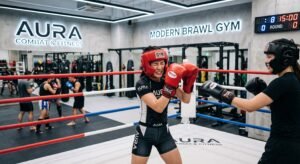
Observe the Gym Vibe: During a trial class, look at what the advanced students are doing. If the seniors are just wildly throwing power punches at the heavy bag with no one doing conditioned sparring or practicing footwork, this might just be a “fitness gym wearing a boxing skin.”
Commercial Trap Warning: Beware of sales-driven gyms that try to hard-sell you a 50-session 1-on-1 package before you even know a basic boxing stance.
💡 Avoid the Traps: Want to know how to choose between 1-on-1 PT and group classes? Check this out: 👉 Boxing Guide: Personal Training (PT) vs. Group Classes – Which is Better? Cost & Effectiveness Explained
Step 3: Essential Gear Guide (Your First Battle Suit)
Boxing is a relatively affordable sport. You don’t need to spend big early on, but you absolutely cannot skimp on these two items:
Handwraps: The soul item for protecting your knuckles and securing your wrists. I highly recommend buying 180-inch semi-elastic handwraps.
Your Own Boxing Gloves: Gyms usually loan communal gloves, but for hygiene reasons (trust me, you do not want to smell that ancient sweat), it is highly recommended to buy your own pair.
Beginner Buying Guide: Under 60kg, choose 10-12oz; 60-80kg, choose 12-14oz. If you are going to spar, you are strictly required to use 16oz gloves to protect your opponent.
Step 4: Polishing Basic Techniques (Patience is Key)
True boxing training is very tedious in the beginning. You have to learn to appreciate the beauty of breaking down techniques:
Stance & Footwork: There’s a saying in boxing: “If you can’t walk, don’t try to punch.” Your feet are your radar and the base of your cannons. Weight distribution, gliding, and pivoting are the keys that separate laymen from real boxers.
The Jab: The jab is the most important punch in boxing. It isn’t used to KO an opponent; it is your ruler (measuring distance), your shield (disrupting the opponent), and your navigator (setting up power punches). You only truly step through the door of boxing when you know how to control the rhythm with your jab.
Defensive Awareness: The biggest beginner flaw is dropping your hands after punching. Always remember to keep your guard up, and learn how to parry, slip, and roll.
💡 Advanced Technique Reading: Feeling like your punches lack power? Want to know how professional coaches help you improve power generation? Check this out: 👉 [Boxing Padwork Guide] Just for Stress Relief? A Former HK Team Coach Reveals 5 True Benefits & Beginner Mistakes
Step 5: The Baptism of Sparring
When your coach thinks you are ready, you will face your first real sparring session. Remember: Sparring is not a street fight; it’s not a fight to the death. Good sparring is “conditioned.” For example, using only jabs, or having one person defend while the other attacks. This is the only true test to see if your techniques break down while moving under pressure. Getting punched in the face will teach you humility and cure all your blind overconfidence.
Beginner Q&A: Your Most Common Questions Answered
To help everyone find answers quickly, I’ve organized the most frequently asked questions by beginners:
Q1: I’m overweight / have terrible cardio. Can I learn boxing?
A: Absolutely! No one “exercises because they are fit”; they “exercise to get fit.” Boxing training includes lots of jump rope, agility footwork, and HIIT (High-Intensity Interval Training), making it one of the most efficient sports for fat burning. A coach will progress gradually based on your fitness level, so you don’t have to worry about throwing up on day one.
Q2: Will girls get too bulky or get thick arms from boxing?
A: Absolutely not! Boxing is a high-intensity combination of aerobic and anaerobic exercise. It primarily trains explosive power and muscular endurance, not muscle hypertrophy (volume). Look at female world boxing champions; their physiques are mostly lean and toned, not bulky like bodybuilders.
Q3: Is it easy to get injured in boxing? Will I get a concussion?
A: If you are joining a regular group class or hitting the heavy bag, the injury risk is arguably lower than playing basketball (where jammed fingers and sprained ankles are common). As for brain trauma, as long as you don’t actively participate in high-intensity sparring, you will not get hit in the head during normal pad work or heavy bag sessions.
Q4: How much do boxing classes in Hong Kong roughly cost?
A: It depends on the district and the gym’s positioning. Generally speaking, monthly group class fees range from $800 to $1,500 HKD. 1-on-1 Personal Training (PT) sessions usually range from $600 to $1,200 HKD per class. I recommend beginners buy a “trial class” first to get a feel for the coach’s teaching rhythm.
Conclusion: Take Your First Step Toward the Ring
Boxing is known as “The Sweet Science.” On the surface, it looks like a brutal physical collision, but in reality, it is a game of physical chess heavily reliant on IQ, discipline, and courage.
You don’t need to dream of becoming the next Rex Tso from day one. The greatest charm of boxing is this: The ring does not lie. The amount of sweat you pour, the number of empty punches you throw, and the times you overcome the urge to quit will ultimately transform into unbreakable confidence when you face life’s pressures.
Stop staring at YouTube fantasizing that you can “fight ten people at once.” Turn off the video, get some breathable workout clothes, and come try real boxing training with us.
Go sweat, feel your heartbeat, and enjoy the crisp sound of your fists hitting the pads! See you in the ring.

Why Are Top UFC Fighters Obsessed with Boxing? 5 Reasons
Notice how UFC fighters are utilizing pure boxing techniques? A former HK Team coach breaks down why MMA striking is returning to traditional boxing, from 4oz glove defense and footwork to wrestling transitions!

[Boxing Beginner’s Guide] A Must-Read for Newbies: Self-Taught boxing or Gym? The Golden Steps from Zero to the Ring
Is self-taught boxing a bad idea? A former HK Boxing Team coach breaks down everything beginners need to know, from gym prices to essential equipment.

[HK Team Coach] Does Kids Boxing Make Them Violent? 5 True Benefits
Worried that kids boxing promotes violence? A former HK Boxing Team coach explains the true benefits of children’s boxing classes in Hong Kong, from building laser focus and confidence to relieving academic stress safely.

Canelo vs. Bivol Breakdown: Why the Mexican Superstar Really Lost
The In-Ring Truth: Technical Breakdown — How the Soviet-Style Defense Neutralized the Mexican Superstar Many people only look at whether “heavy punches land,” but to

Hong Kong Boxing Guide: From Local Gyms to the Olympic Ring
Want to compete in boxing in Hong Kong? Discover the ultimate pathway from local gyms to the Olympic ring. Learn about BAHK, pro vs amateur, and how to start!

[Hong Kong Boxing History] From Southorn Stadium to Queen Elizabeth Stadium | HK Team Coach Explains
Did boxing in HK start as street fights? Discover the true history of Hong Kong boxing with former HK Team coach Chan Ka Wa! From the grassroots passion of Southorn Stadium to Rex Tso’s boxing mania, learn how boxing became HK’s trendiest sport.