
Why Do Boxers Jump Rope? 5 Core Benefits Explained by a Former HK Team Coach | Chan Ka Wa Boxing HK

點打打拳跳繩?前港隊拳擊教練為新手拆解打拳同跳繩嘅隱藏關係!由鍛鍊步法、提升心肺到防守放鬆,一篇睇清跳繩點解贏過跑步,附帶零基礎跳繩指南!

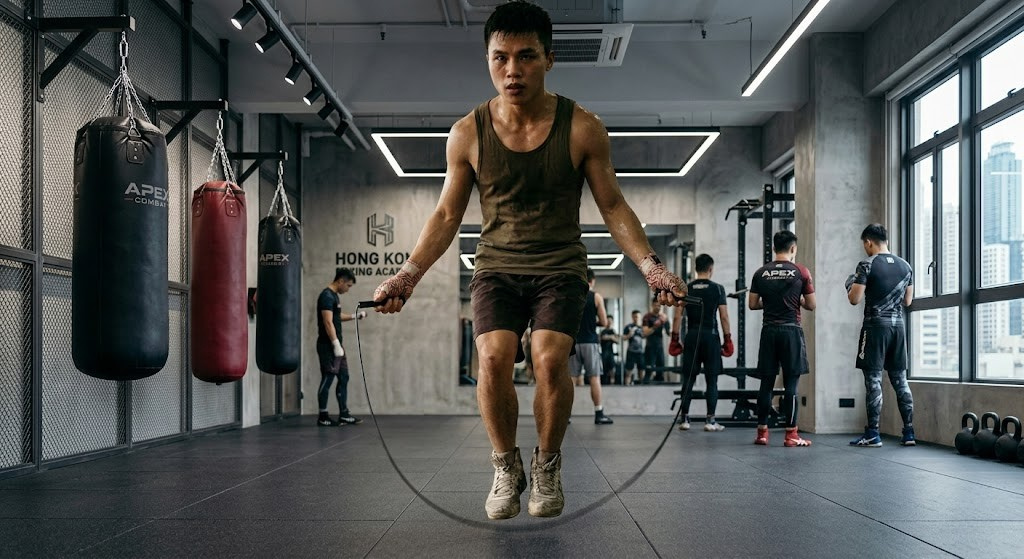
Walk into any boxing gym in Hong Kong, and the first sound you hear might not be the heavy “thud” of punches hitting the bag, but the rhythmic “swish-slap” of jump ropes hitting the floor. For many beginners starting their boxing journey, a massive question mark pops up: “I paid for a boxing class to learn how to punch! Why is the coach making me skip rope for 15 minutes straight?”

As a boxing beginner, you are definitely not the only one left breathless and confused by the jump rope. The frustration is real. However, jumping rope is absolutely not a tool coaches use to “kill time.” It is a fundamental building block that every elite fighter—from Mike Tyson to Naoya Inoue—cannot avoid.

Today, we are going completely under the hood to explain why boxers jump rope and reveal the combat applications behind this traditional training method. Whether you are looking for authentic boxing training in HK or just want to use boxing for weight loss, this article will guarantee to change your perspective on skipping!

[Looking to burn fat? Check out our ultimate guide:] 👉 [Boxing for Weight Loss: Burn 800 Calories in One Hour!]

The Beginner's Myth: Boxing is Only About the Hands... Right?

Many beginners assume boxing is an “upper body sport,” relying solely on arm strength to throw punches. This is a massive misconception!

In the real world of boxing, power originates from the ground up: pushing off your feet, rotating your hips, and finally transferring that kinetic energy into your fists. If your lower body is unstable and your footwork is sluggish, it doesn’t matter how strong your arms are—you won’t be able to land hits or evade attacks in the ring. Jumping rope is the ultimate weapon to connect your upper and lower body, laying down a solid foundation for boxing.

Unpacking the 5 Core Benefits of Jumping Rope for Boxers

Jumping rope is the standard warm-up and conditioning tool in gyms worldwide because it perfectly simulates the physical demands of boxing. Here are the five critical impacts skipping has on beginners:

1. Building Extreme Boxing-Specific Cardio

Boxing is a high-intensity interval sport (HIIT). In the ring, you need to constantly explode, move, and recover in a fraction of a second. While regular jogging is great for cardio, the rhythm of jumping rope (especially variable-speed skipping) closely mimics the heart rate spikes of an actual bout. Consistent skipping rapidly increases your VO2 max, keeping you sharp and energized in the later rounds.

2. Developing the Unique "Boxing Rhythm"

Boxing isn’t a street brawl; it’s more like a highly rhythmic dance. Elite fighters maintain a constant “bounce” or rhythm in the ring. Jumping rope forces you to jump to the beat of the rope hitting the ground. This training directly translates into your in-ring rhythm. Once you catch this rhythm, your punches, slips, and defensive moves will flow naturally instead of looking stiff and robotic.

3. Enhancing Footwork and Hand-Eye Coordination

There’s a saying in the sport: “Boxing is played with the feet.” Footwork is often the hardest hurdle for beginners. Jumping rope demands your brain to simultaneously control your upper body (turning the rope) and lower body (jumping). This drastically improves coordination. Once you learn to land lightly on the balls of your feet while skipping, executing glides, pivots, and pendulum steps becomes significantly easier. Want to know why footwork is everything? See my breakdown here: 👉 Pro vs. Olympic Boxing: The Difference in Footwork

4. Learning Muscle Relaxation and Weight Transfer

The most common beginner mistake is being “too tense”—shrugging shoulders and clenching fists with brute force. This not only drains your stamina but also slows down your punches. Proper skipping posture requires relaxed, dropped shoulders, flexible wrist rotation, and slightly bent knees. This is the exact state of relaxation needed for boxing defense and striking preparation. Furthermore, techniques like the “Boxer Skip” train your ability to rapidly shift your center of gravity between your left and right foot, preparing you for throwing fluid combinations.

5. Strengthening Calves and Preventing Injuries

Boxing involves constant bouncing and rapid directional changes on your toes. If your calf muscles and Achilles tendons aren’t strong enough, you risk developing plantar fasciitis or spraining an ankle. Jumping rope specifically conditions the posterior calf muscles and the ligaments around the ankle, essentially equipping your legs with invisible armor.

Training Showdown: Why Not Just Run on a Treadmill?

Many students ask: “Coach, can I just run on the treadmill for my warm-up instead of skipping?”

While both are aerobic exercises, jumping rope holds an irreplaceable position in boxing training.

FeatureBoxing Jump RopeJogging / Treadmill
Coordination RequiredExtremely High (Rhythm & full-body sync)Low (Linear movement)
Landing MechanicsBalls of the feet (Matches boxing stance)Heel or mid-foot strike (Unlike boxing)
Space & EquipmentMinimal (One rope, tight space)Requires a machine or outdoor track
Fat Burning EfficiencyExtremely High (Heavy sweat in 15 mins)Medium (Requires longer duration)
Combat TranslationHigh (Directly builds ring agility)Low (Mainly builds base stamina)

Beginner’s Jump Rope Guide: What if I Can't Skip at All?

If you haven’t touched a jump rope since childhood, or if you trip every two seconds, do not get discouraged! This is a mandatory rite of passage for every beginner.

  • Accept the Trips: Tripping is 100% normal. Don’t feel pressured if the seniors next to you are skipping like a machine gun.

  • Start with Basic Two-Foot Bounces: Don’t try the “Boxer Skip” on day one. Learn to bounce lightly with both feet together, just high enough to clear the rope. Do not jump too high or kick your heels backward.

  • Focus on Wrist Rotation: Many beginners swing the rope with their entire arms, leaving their shoulders gassed in two minutes. The correct method is to keep your elbows tucked near your waist and use your wrists to draw small circles.

  • Choose the Right Gear: Beginners should use a slightly heavier PVC rope (to feel the trajectory in the air) and wear indoor training shoes with good shock absorption to protect the knees. Need shoe recommendations? Check this out: 👉 12 Best Boxing Shoes Recommendations

Boxing Jump Rope FAQ

To get straight to the point, we’ve compiled the most common questions regarding boxing warm-ups and skipping:

Q: Why do boxers have to jump rope?

A: Because jumping rope perfectly simulates the physical state of boxing. It spikes your heart rate for a warm-up, builds coordination, develops rhythm, strengthens calf tendons, and trains beginners to land lightly on the “balls of their feet.”

Q: Can I learn to box if I don't know how to jump rope?

A: Absolutely! Skipping is a learned skill. Most coaches in Hong Kong will teach you from scratch. Even if you aren’t great at it initially, you can still hit the heavy bag and do conditioning. With practice, you’ll pick it up quickly.

Q: How long should I jump rope before boxing?

A: A standard boxing warm-up consists of 3 to 4 rounds of skipping (3 minutes per round, with a 1-minute rest in between), totaling about 10 to 15 minutes. This is enough to break a sweat and mobilize your joints.

Q: What gear do I need as a boxing beginner?

A: Besides breathable activewear and clean indoor shoes, the absolute essential is your own pair of “Handwraps” to protect your wrists and knuckles. Most gyms provide communal gloves and ropes, but for hygiene and feel, buying your own is highly recommended. First time taking a class? I highly recommend reading my prep guide: 👉 5 Must-Know Tips & Gear Checklist for Your First Boxing Class Looking to buy gloves? 👉 The Beginner’s Guide to Choosing Boxing Gloves in 1 Picture

Q: Is jumping rope and boxing really that effective for weight loss?

A: It’s incredibly effective! Boxing paired with a jump rope warm-up is a prime HIIT workout. A proper one-hour class can burn 500 to 800 calories, and the “Afterburn Effect (EPOC)” keeps your body burning fat long after you rest.

Conclusion: Pick Up the Rope and Start Your Journey

The answer to “why boxers jump rope” is written in the sweat of every warm-up. It tempers not only your body but also your patience and focus. The next time you grab that rope at the gym, try not to see it as a chore. See it as your first vital weapon in mastering the sweet science!

Ready for the challenge? Sign up for a professional class at Chan Ka Wa Boxing HK today and experience the thrill of authentic boxing!

Still hesitant about choosing the right gym? Read this: 👉 [A Former HK Team Coach Reveals 5 Red Flags When Choosing a Gym!]