

[Beginner's Boxing Glove Guide] How to choose boxing gloves? 1 Chart to Tell God-Tier from Entry-Level! A Buyer's Guide Based on Soviet Boxing Science | Chan Ka Wa Boxing

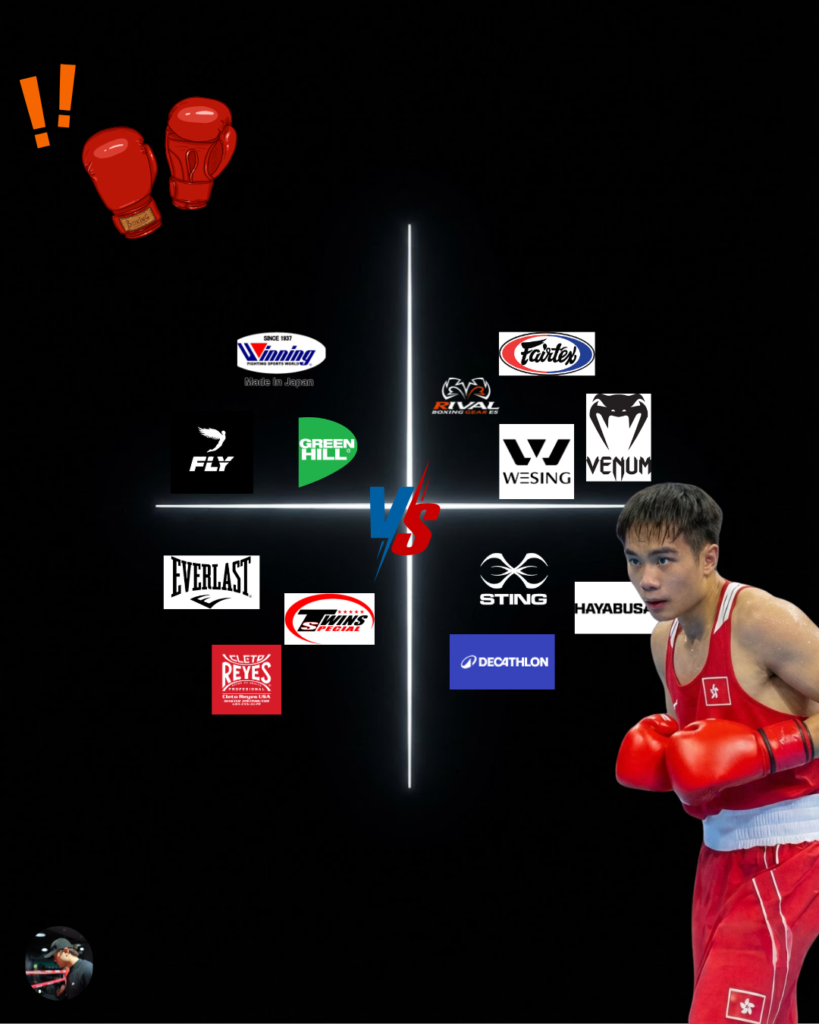
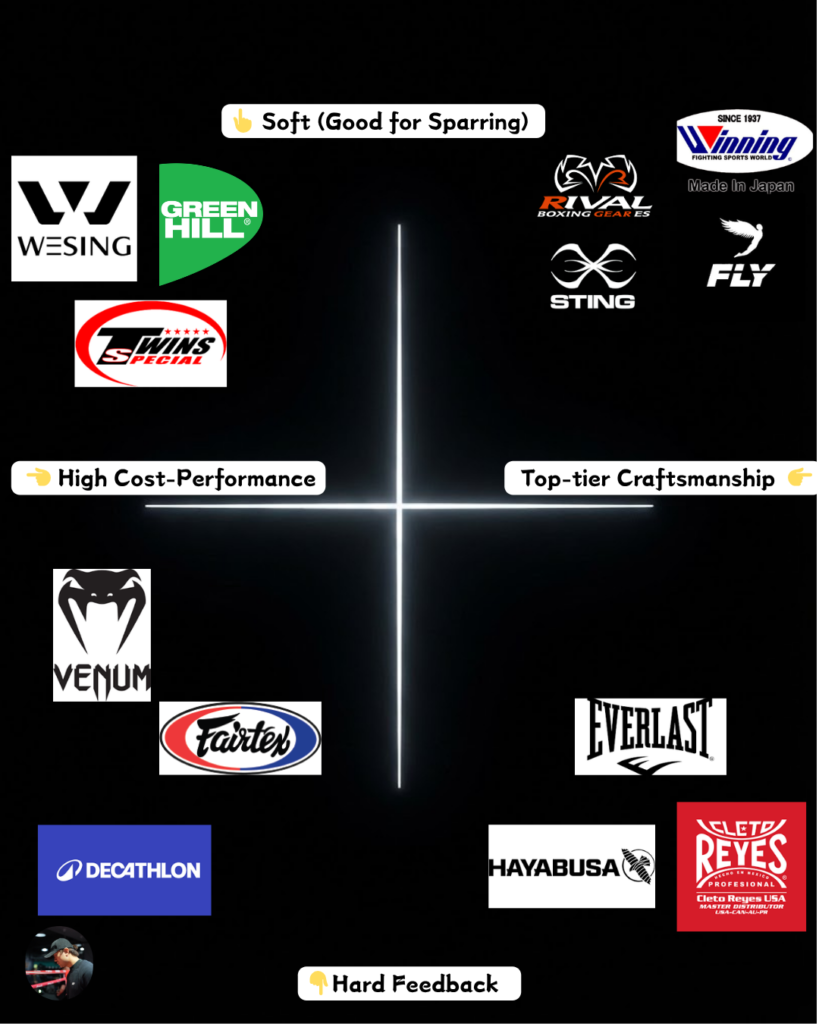
Cover graphic for a boxing glove guide titled "Boxing Glove Brawl: Distinguish 'God-tier' from 'Entry-level'." The image displays logos of popular combat sports brands like Winning, Cleto Reyes, Everlast, Fairtex, and Venum scattered around a blank graph template.

 How to choose boxing gloves? When many beginners in Hong Kong start learning to box, the very first thing they do is go online and buy the coolest, most expensive pair of gloves they can find. But did you know that buying the wrong boxing gloves can lead to serious consequences? At best, you might injure your wrists on the heavy bag; at worst, you could cut or bruise your sparring partners—making you the least popular person in the gym!

A Good pair of boxing gloves can avoid wrist pain:  How to Hit the Heavy Bag? No Power or Progress? Coach Reveals 3 Fatal Mistakes Causing Wrist Pain and Getting Countered!

In the Soviet Boxing Sports Science System that I teach, we emphasize “efficiency” and “protection.” Boxing isn’t about brute force collisions, and gear isn’t necessarily better just because it’s more expensive. It’s about “geometric mechanics” and “physical force dispersion.” Today, I am using one simple chart to completely deconstruct the most common boxing gloves on the market from a scientific and practical perspective!

(Want to know how to choose boxing shoes? 👉 [2026 Boxing Shoes Guide] Running Shoes vs. Boxing Shoes: 12 Popular Picks for Beginners!)

Step 1: Identify Your Training Goals — Soft Shock Absorption vs. Hard Feedback

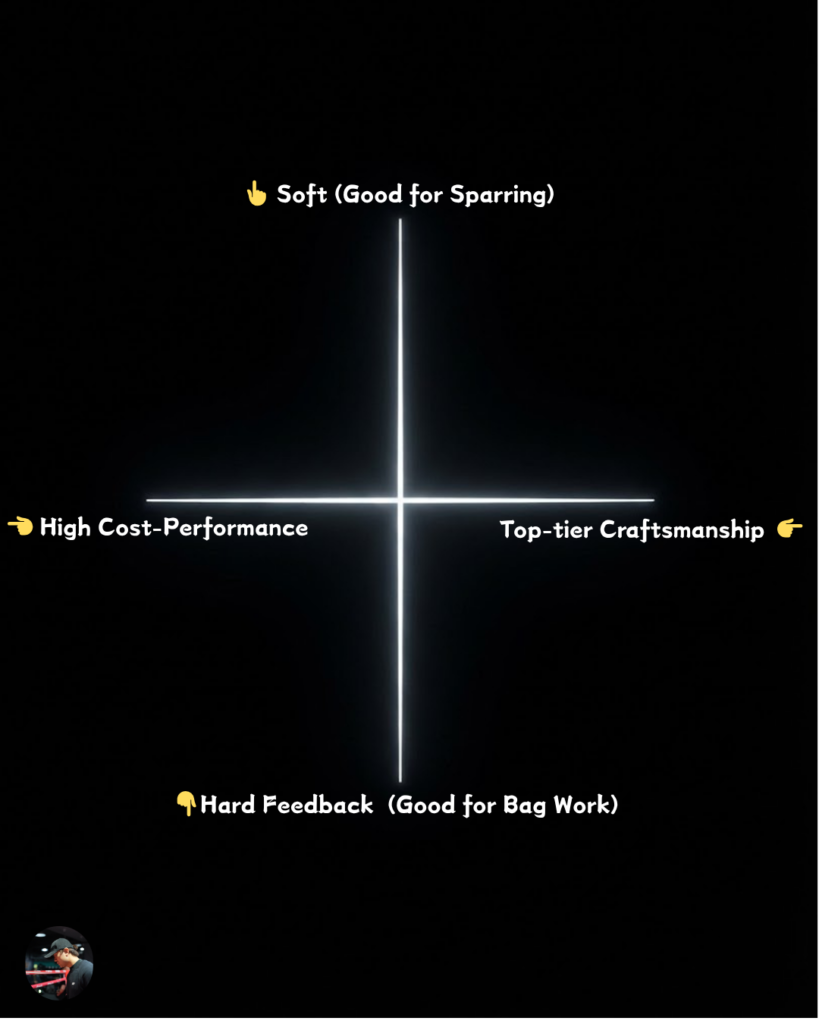
A blank graph explaining the criteria for choosing boxing gloves. The vertical axis compares "Soft/Shock Absorption (for Sparring)" against "Hard Feedback (for Bag Work)". The horizontal axis compares "High Cost-Performance (Practical)" against "Top-tier Craftsmanship (Luxury)". A warning note highlights the dangers of using the wrong glove type.

The foundational logic behind why the Soviet Olympic boxing system dominated the world is “safety maximization.” To prolong your athletic lifespan, you must first understand the physical properties of your gloves. I categorize gloves on the market into four main quadrants based on two extremes:

  • Too Hard (Hard Feedback): Excellent power penetration. They feel incredibly satisfying on the heavy bag, but if you use them for sparring, they will transfer the impact directly to your opponent’s face, easily causing cuts or bruises.

  • Too Soft (Soft Shock Absorption): Excellent protection, perfect for sparring. However, if you use excessively soft gloves for heavy bag work over a long period, your knuckles will easily “punch through” the padding (bottoming out), forcing your wrists and finger bones to absorb too much reaction force, leading to injury.

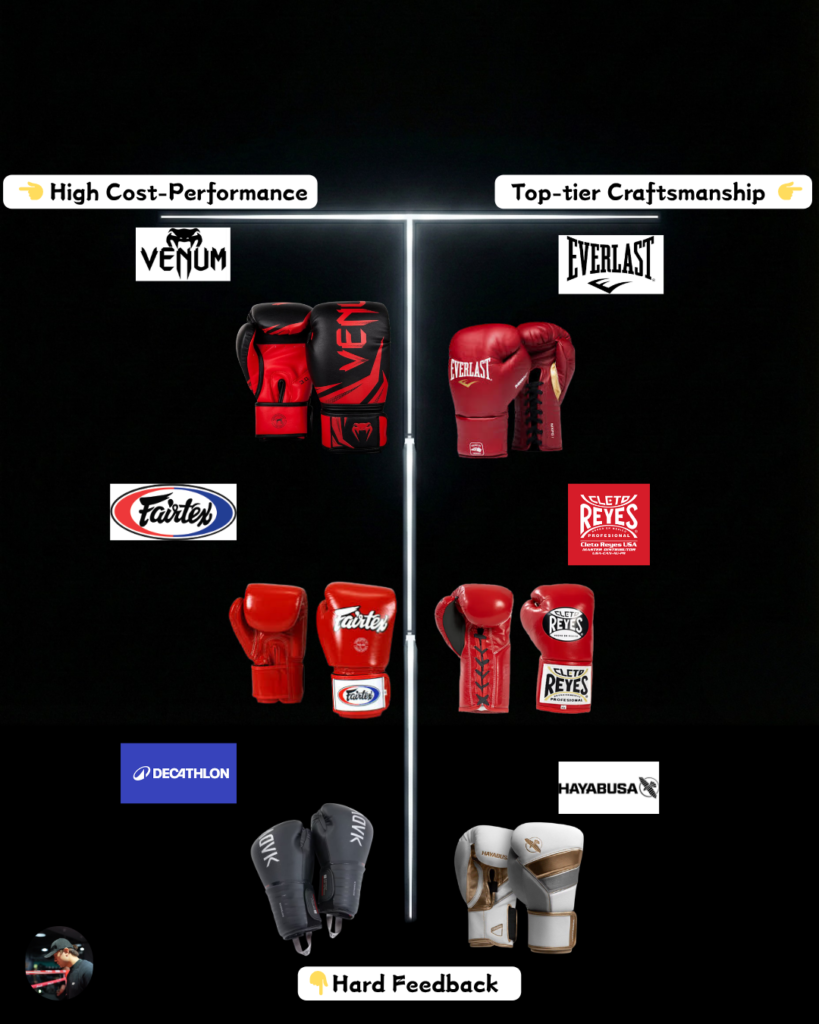
The Bottom Half: Hard Feedback Type (Ideal for Bag Work / Pad Work)

Infographic detailing the bottom half of the glove matrix: "Hard Feedback" gloves suited for heavy bags and pad work, not sparring. It categorizes entry-level options like Venum and Decathlon, Muay Thai brands like Fairtex, and high-end puncher's gloves like Everlast MX, Cleto Reyes, and Hayabusa.

Gloves in this zone pursue “impact feel” and “destructive power.” The prime examples are Mexican-style gloves.

Take Cleto Reyes or Everlast MX—often called “puncher’s gloves”—for example. They use traditional horsehair padding, characterized by being “thin, penetrating, and responsive.” In the professional arena, this design is meant to maximize damage. But for the average beginner looking for fitness or refined technique, I highly advise against using these for sparring.

If you are new to boxing and simply want a dedicated pair of gloves for heavy bag work and cardio, entry-level models from Venum or Decathlon are perfectly sufficient for fat-burning workouts.

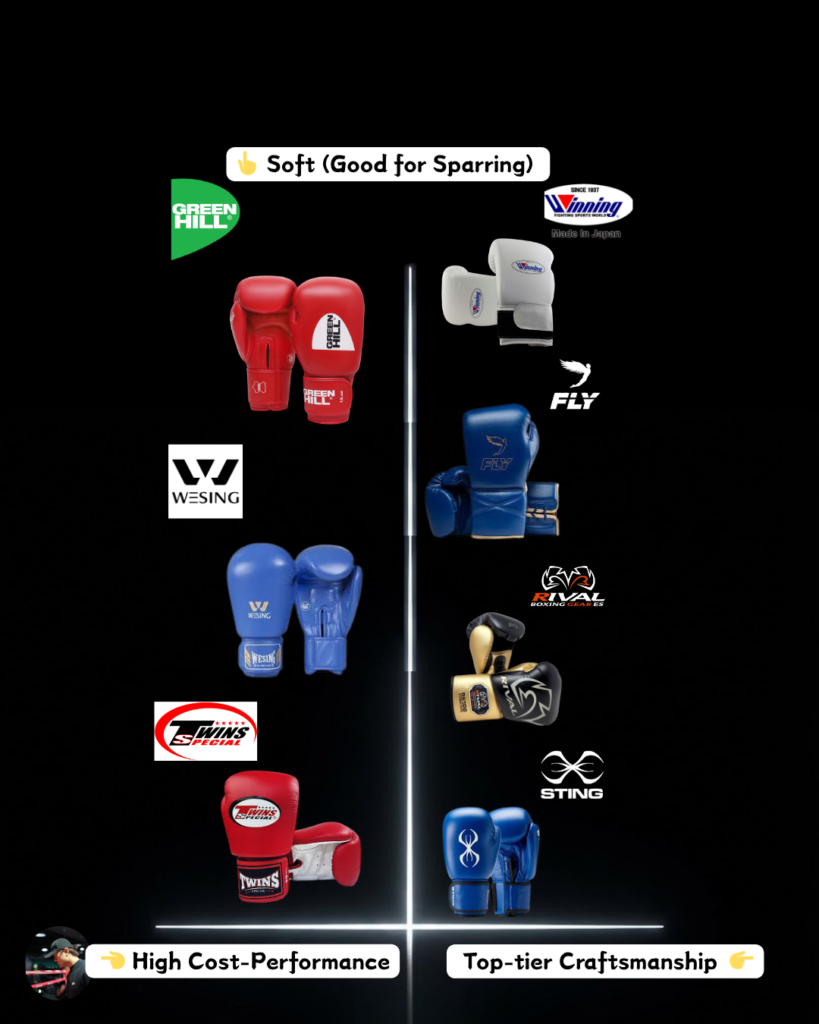
The Top Half: Shock Absorption & Protection Type (Best for Longevity & Sparring)

Infographic detailing the top half of the glove matrix: "Soft Shock Absorption" gloves designed for safe sparring. It highlights affordable, protective options like Green Hill, Wesing, and Twins, alongside premium luxury and highly protective brands like Winning, Fly, Rival, and Sting.
  • Gloves in this zone perfectly align with the spirit of “Soviet Olympic Boxing Science”: protecting the athlete and focusing on technical exchange rather than pure destruction.

    • Olympic Standards (IBA Approved): Brands like Green Hill, Sting, and top Chinese brand Wesing. These gloves are designed specifically for amateur/Olympic bouts. The shock-absorbing foam inside is so thick it feels like wearing two pillows. The Soviet system heavily emphasizes “dynamic defense” and “high-frequency countering.” Wearing these, you can safely practice precise “geometric angle-cutting” with your teammates without the fear of hurting them.

    • The Industry Ceiling: Japan’s Winning and the UK’s Fly. The inner lining is incredibly comfortable, and the shock absorption is mind-blowing. They protect your hands while simultaneously protecting your sparring partner. They are the ultimate “buy it for life” choice.

    • Wrist-Lock Technology: Rival’s unique V-Strap design securely locks the wrist in place. For beginners who haven’t yet mastered “kinetic chain power generation” and are prone to bending their wrists, these are an absolute lifesaver.

The fully populated boxing glove comparison chart. It maps all the featured brands across four distinct quadrants based on their primary use (sparring vs. bag work) and their price-to-quality ratio (cost-performance vs. luxury craftsmanship).

Beginner FAQ: How to Choose Oz Sizes and Glove Types?

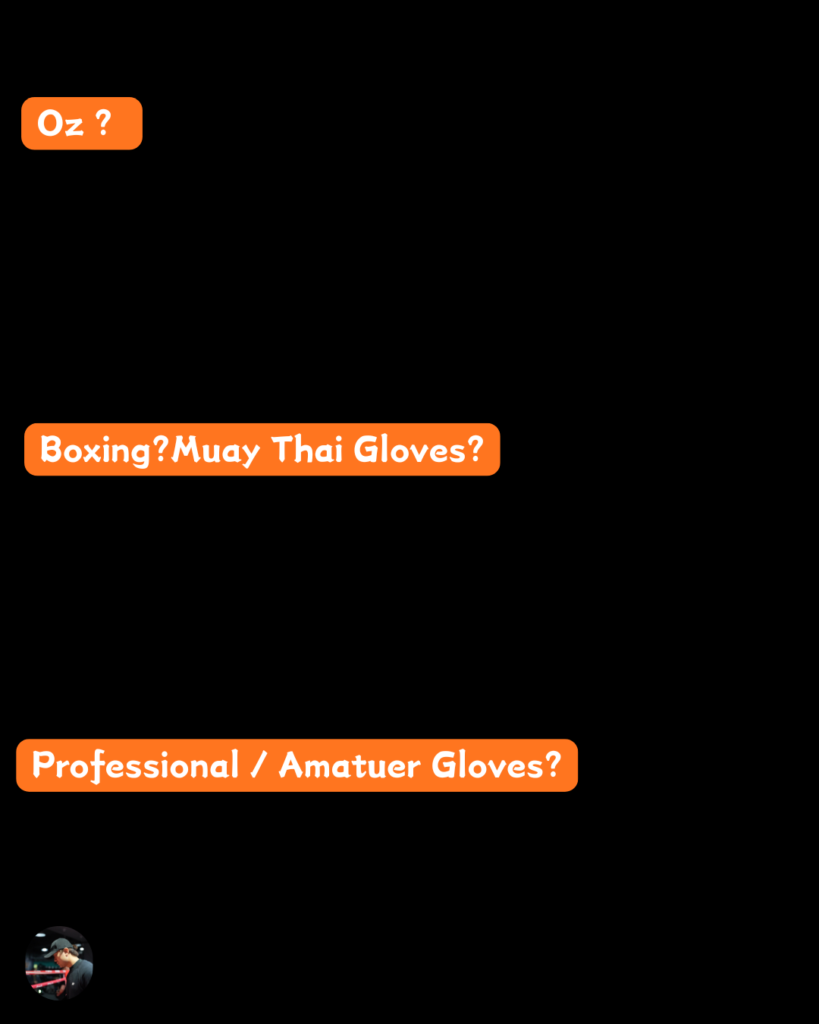
A text-based guide explaining boxing glove specifications. It recommends 10oz to 12oz gloves for bag and pad work, and 14oz to 16oz for sparring. It also explains structural differences between standard Boxing gloves and Muay Thai gloves, as well as the difference between Professional fight gloves (damage focused) and Amateur Olympic gloves (protection focused).
  • Many students who come to Chan Ka Wa Boxing for a trial class ask these common questions:

    1. Which Oz (Ounce) size should I choose?

    • Heavy Bag / Pad Work (For training speed and power mechanics): 10oz – 12oz.

    • Sparring (For training reflexes and protecting partners): 14oz – 16oz.

    2. Can I use Muay Thai gloves (like Fairtex or Twins) for pure Boxing? Yes, but you need to be aware of the design differences. Muay Thai gloves have thicker padding on the back of the hand (to block kicks) and a shorter, more flexible cuff (to allow for clinching). In contrast, pure boxing gloves provide much stiffer wrist support, which is far more beneficial for practicing the “straight penetrating power” heavily emphasized in the Soviet system.

Gear is Dead, The Scientific System is Alive

Outro image featuring a boxing coach standing in a gym. Text overlays remind viewers that "Gear is dead, people are alive. Different gloves have different uses." The graphic includes a call-to-action button encouraging users to save and share the post if they found it helpful.

A good pair of gloves can protect you from injury, but what truly makes you stronger is your underlying logic of power generation.

In professional fights, the goal is to use hard gloves to inflict damage. But in our classes, the goal is to use Soviet scientific training to master elite distance control and kinetic chain structures.

If you are tired of blindly swinging at heavy bags, want to stop relying on brute force, and prefer to use “logic” to deconstruct world-class boxing techniques, I sincerely invite you to experience it for yourself.

No gear yet? Absolutely no problem! Our 1-on-1 trial classes provide thoroughly sanitized, professional-grade gloves for you to use. Once you have mastered your basic center of gravity and geometric stance, I will personally help you select the most suitable personal gear.

[Click here to WhatsApp and book your 1-on-1 Soviet Science Trial Class]