
Pro Boxing vs. Olympic/Amateur: Differences & The Soviet System Explained in 1 Minute | Chan Ka Wa Boxing

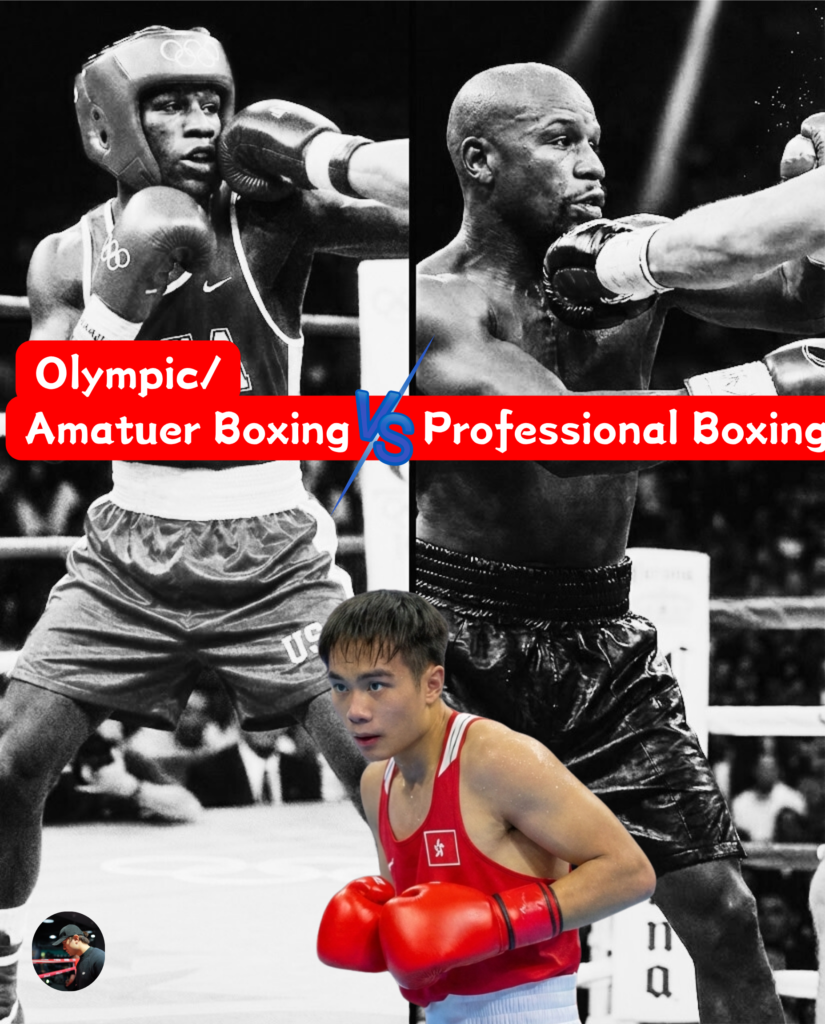
Pro Boxing vs. Olympic/Amateur Cover graphic for a guide comparing Olympic/Amateur boxing versus Professional boxing. The image features a split-screen of Floyd Mayweather wearing protective Olympic headgear on the left and fighting shirtless as a professional on the right. Text reads: "Deconstruct the differences in 1 minute!"

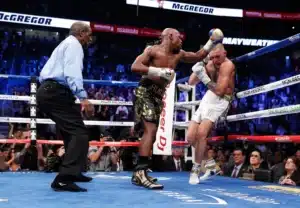
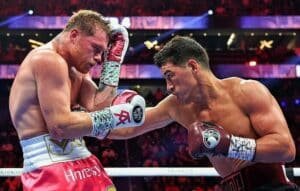
Many people watching a boxing match see professional fighters throwing brutal, flesh-hitting punches without headgear and easily develop a common misconception: “Professional boxers must be way stronger than Olympic or amateur fighters!”

But in reality, while both are called “boxing,” they are two completely different worlds when it comes to tournament structures, equipment, scoring logic, and foundational tactics!

(Want to know how to progress faster? Read: Is 24 too late to learn boxing? Science deconstructs “Boxing Talent vs. Deliberate Practice” – How ordinary people can surpass geniuses!)

Today, Chan Ka Wa Boxing is going to take 1 minute to completely deconstruct the differences between the two, and explore why top-tier fighters produced by the “Olympic System” have been absolutely dominating the professional ring in recent years!

1. Nature of the Event: National Honor vs. Commercial Prize Fighting Pro Boxing vs. Olympic/Amateur

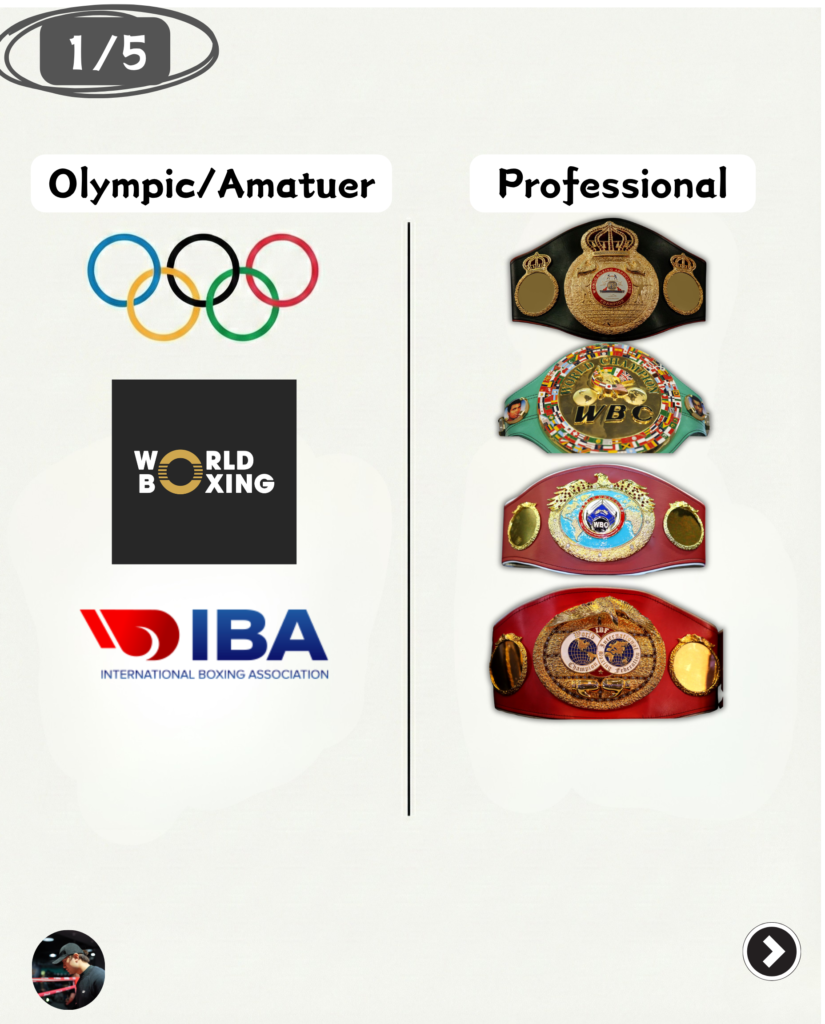
Infographic comparing the structure of the two boxing worlds. The left side highlights Olympic/Amateur boxing (Olympic Rings, World Boxing, IBA logos), focusing on national sports events, random opponent draws, and fighting for medals. The right side highlights Professional boxing, featuring WBA, WBC, WBO, and IBF championship belts, focusing on individual commercial bouts and agreed-upon opponents.
  • First, the starting points and ultimate goals of the two systems are entirely different.

    • Olympic / Amateur Boxing: This is a national-level sporting event. Fighters represent their countries, and opponents are drawn by a lottery system, meaning matchups are full of unknowns. The ultimate goal is to fight for Gold, Silver, and Bronze medals on the Olympic or international stage.

    • Professional Boxing: This is a highly commercialized individual sport. Fighters represent themselves and their management teams. Opponents are deliberately “agreed upon” and selected by both camps. The ultimate goal is to challenge for “Championship Belts” across various organizations (WBC, WBA, WBO, IBF) and earn lucrative fight purses.

2. Equipment Differences: High Protection vs. High Damage

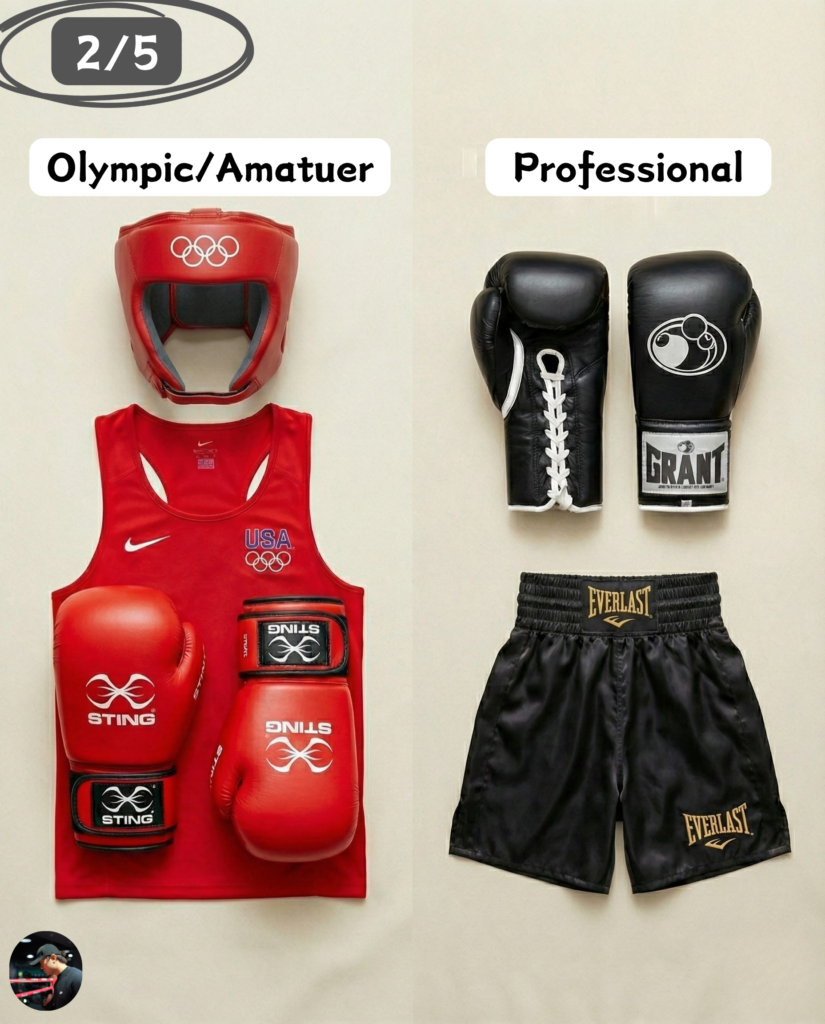
A visual comparison of boxing equipment. Olympic/Amateur boxing requires strict red or blue uniforms, mandatory tank tops, and highly protective 10-12oz gloves. Professional boxing features customized colored trunks to show personality, no shirts for men, no headgear, and thinner, more damaging 8-10oz gloves.
  • Insiders often refer to the professional ring as a “slaughterhouse,” and this is most clearly reflected in the equipment rules:

    • Glove Thickness (The Crucial Difference!): To protect the athletes, Olympic/Amateur bouts require thicker 10-12oz gloves with a rounder knuckle area. Professional bouts, aiming to increase KO rates and entertainment value, use much thinner, compact 8-10oz gloves, drastically increasing their destructive power.

    • Headgear & Apparel: In the Olympics, women and youth divisions must wear headgear (adult men no longer wear it), and all fighters must wear boxing tank tops. In the pros, headgear is completely banned, and male fighters must fight shirtless.

    • Trunk Colors: Amateurs are strictly required to wear designated Red or Blue corner uniforms. Professional fighters have the freedom to design custom fight trunks that showcase their personal brand and style.

    (For more on choosing gloves, check out our previous article: [Beginner’s Boxing Glove Guide] 1 Chart to Tell God-Tier from Entry-Level!)

3. Scoring Logic: The Hidden Dangers of the "10-Point Must System"

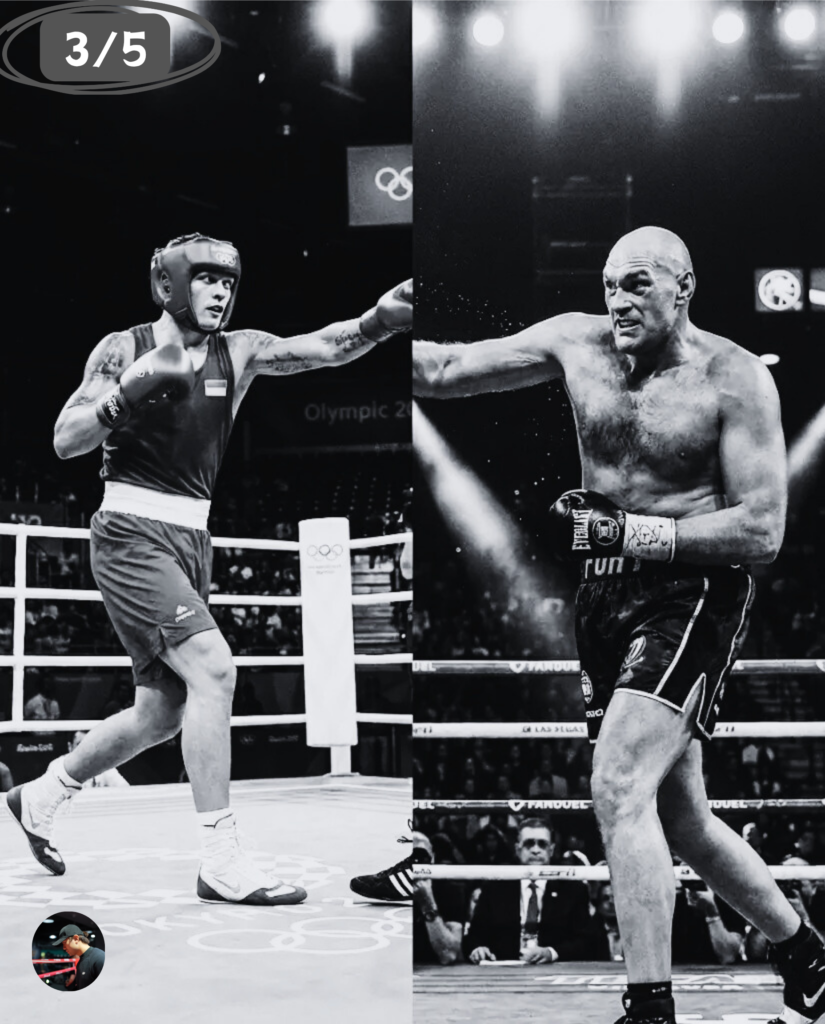
Graphic explaining the boxing scoring system with Tyson Fury and Oleksandr Usyk in the background. It explains that both amateur and professional ranks use the "10-Point Must" system. It highlights the differences in point deductions for knockdowns and notes that winning in the 4 to 12-round professional format requires controlling rhythm and capturing moments for heavy strikes.

While both systems utilize the “10-Point Must System” (where the winner of a round gets 10 points, and the loser gets 9 or less), the devil is in the details!

The biggest difference lies in the Knockdown Deduction mechanism:

  • Professional: If you are knocked down and the referee counts, it is a mandatory 1-point deduction! This means even if you dominated the entire round, getting dropped once instantly erases your advantage.

  • Olympic / Amateur: A knockdown does not guarantee a hard point deduction! The referee views a knockdown as an indicator of disadvantage, but if you get right back up and furiously counter-attack to reclaim the momentum, you can still win that round on points.

Furthermore, professional fights are grueling marathons (championship bouts last up to 12 rounds), heavily emphasizing “rhythm control” and “capturing moments for heavy strikes.” Olympic bouts are usually only 3 rounds, requiring an explosive sprint of extreme high-frequency output and precision.

4. Why Do Olympic Fighters Dominate the Pros? The Secret of the "Soviet Boxing System"

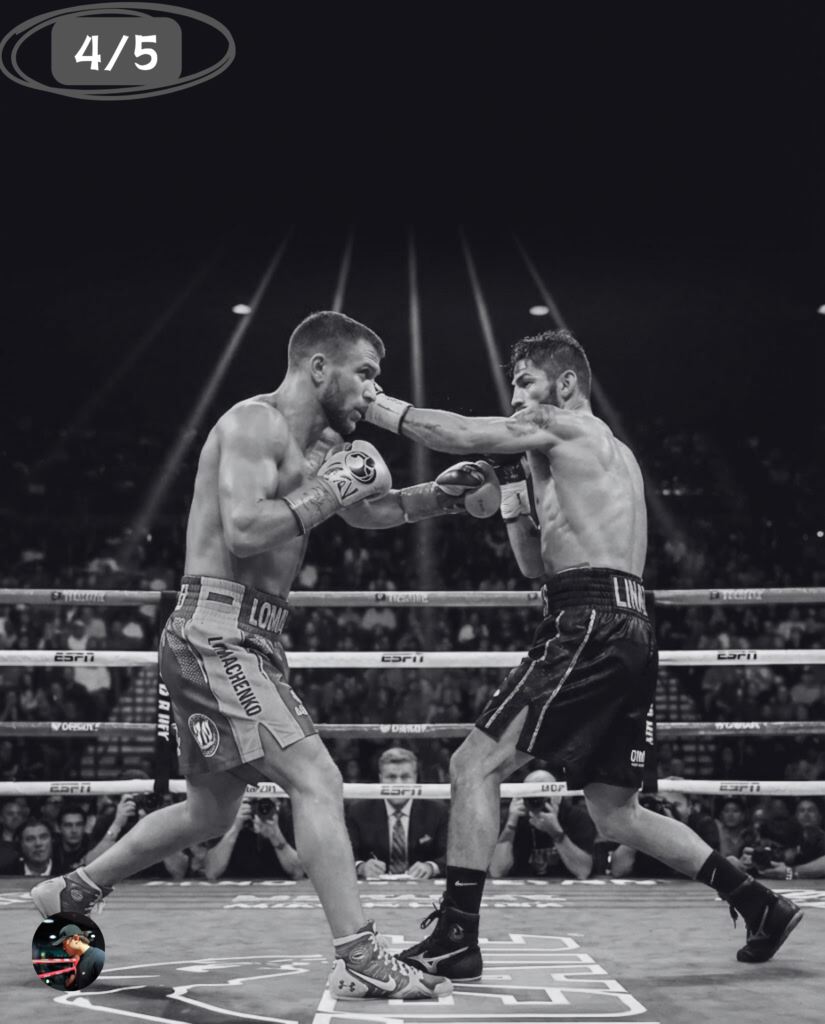
Black and white photo of Vasyl Lomachenko landing a punch. The text addresses the myth that Olympic styles don't work in pro boxing, stating that masters like Usyk, Lomachenko, and Bivol prove otherwise. Their elite "distance control" and "angle-cutting footwork" allow them to "hit and not get hit," dominating the professional boxing world.

If you’ve followed professional boxing in recent years, you’ve definitely heard the names Usyk, Lomachenko, and Bivol. Not only do they rule the pro ring, but they all share one common trait: they all come from the Olympic/Amateur system and are absolute masters of the “Soviet Boxing System”!

What is the Soviet Boxing System? This system places extreme emphasis on an “elite sense of distance,” the “Pendulum Step,” and “Angle-cutting techniques.”

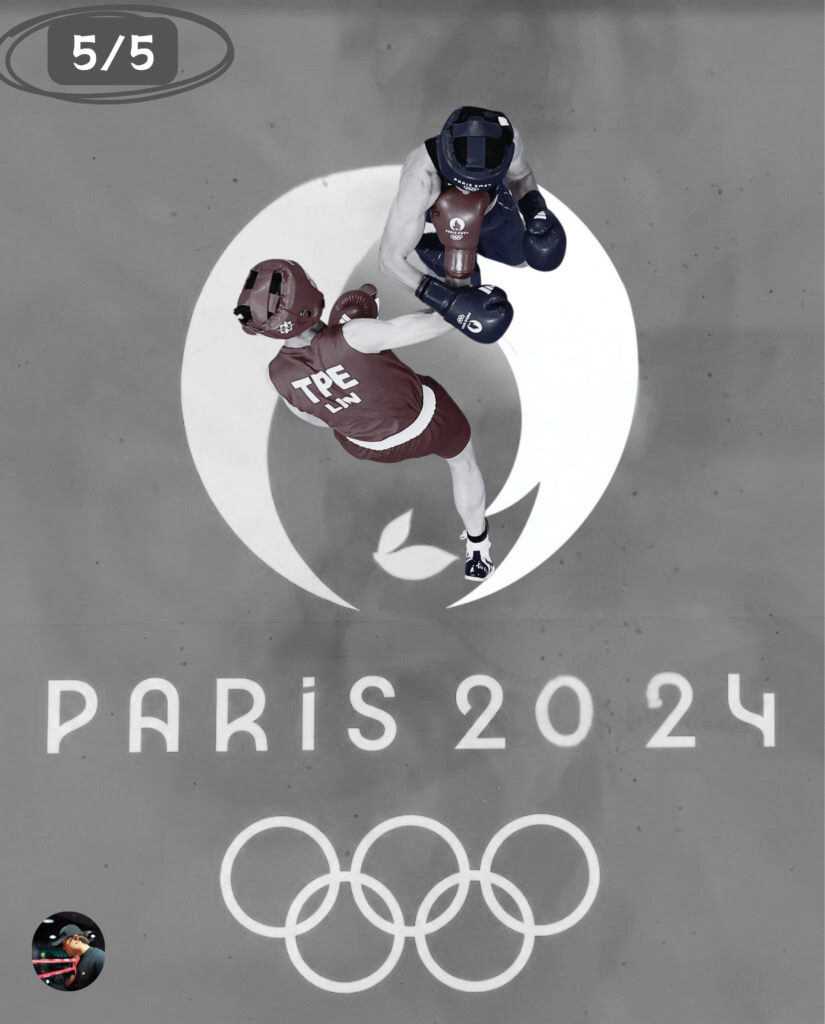
During the 3-round sprint of the Olympics, fighters must perfect their footwork to achieve the ultimate goal: “Hit and not get hit.” This amateur phase acts as the ultimate “Super Foundation Period” for a boxer.

When these top-tier amateurs—who have drilled defense and distance control into their muscle memory—transition to the professional ring, they frequently outmaneuver and completely dismantle professional fighters who rely purely on brute force and brawling.

Top-down view of two Olympic boxers competing, with a Paris 2024 logo faintly in the background. The text explains that the Olympic/Amateur phase is a "Super Foundation Period," where fighters develop the highest level of distance control and defensive reflexes, which is why most professional champions come from Olympic backgrounds.

Summary: No System is "Better," Just Different

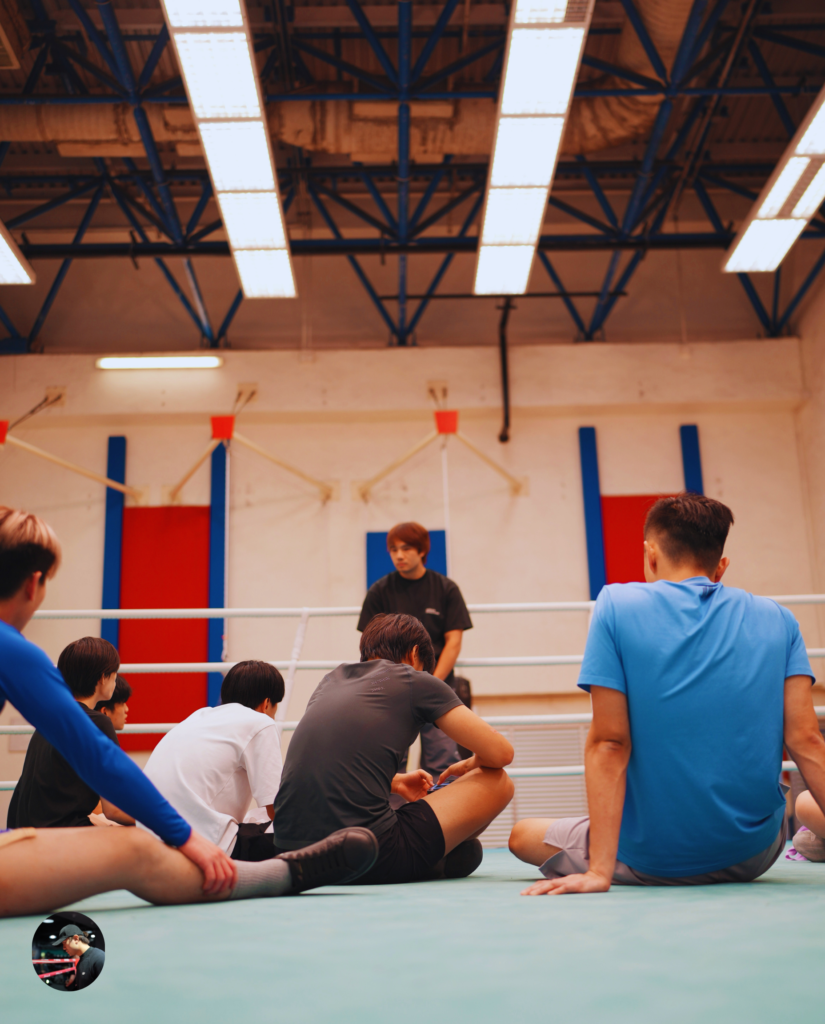
A boxing coach sits on the ring canvas instructing a group of attentive students. The summary text clarifies that professional boxing is not inherently "stronger" than amateur boxing, as many pro kings start as Olympians. A call-to-action banner encourages viewers to DM to book a trial class to learn Olympic boxing.

Professional boxing is definitely NOT inherently “stronger” than Olympic/Amateur boxing! In fact, the glorious achievements of many top professional champions are built entirely upon the solid foundations they laid during their early amateur careers.

Boxing has never been just about colliding with brute force and courage; it is a high-level physical chess match filled with tactics, footwork, and precise distance calculations.

Want to experience an Olympic-level boxing foundation that emphasizes “distance and footwork”? Welcome to Chan Ka Wa Boxing! We offer systematized boxing training. Whether you are a complete beginner looking for a safe, sweat-inducing workout, or you want to deep-dive into practical combat techniques, we can help you build the highest level of boxing fundamentals.

👉 WhatsApp us now to book your trial class!

(Afraid to take the first step? Read: [Beginner Boxing] What to prepare for your first class? 5 essential tips from the coach!)