
[Boxing Conditioning] Always Gassing Out? Former HK Team Boxer Breaks Down the 3 Energy Systems & Fight Prep | Chan Ka Wa Boxing HK

Boxing Conditioning: Always Gassing Out? The 3 Energy Systems Explained

For many beginners and even experienced fighters, the worst nightmare in the ring or during sparring isn’t how hard the opponent hits, but “gassing out” by the second round—arms too heavy to keep your guard up, footwork dragging, and tasting blood in your throat when you breathe.

Why does hitting the heavy bag feel so easy, but you instantly lose your breath in the ring?

As a former Hong Kong Boxing Team member, I’ve seen countless highly technical fighters hand over their victory because of the wrong boxing conditioning methods. Today, combining my real-ring experience and sports science, I will completely break down boxing’s energy systems and teach you how to truly prepare your cardio for an amateur boxing match!

How Do Conditioning Requirements Differ Between Olympic and Pro Boxing?

Many people watch 12-round professional championship fights on TV and assume boxing requires marathon-level endurance. But if you are preparing for a local amateur bout in Hong Kong or fighting under Olympic boxing rules (3 rounds x 3 minutes), your conditioning strategy needs to be entirely different!

Because professional boxing involves many rounds, the first few rounds are often used to feel out the opponent at a slower pace. Olympic boxing, however, is extremely fast-paced—an absolute “anaerobic sprint.” Once the bell rings, both fighters explode with combinations, pressure, and point-scoring. Within those short 9 minutes, the demand on a fighter’s “lactic acid tolerance” hits the human limit. If you train for Olympic boxing like you’re running a marathon, you will severely lack explosiveness and speed in the ring.

[Extended Reading: Want to know why footwork is so important? Read this 👉 Pro vs. Olympic Boxing: Why is Footwork So Important?]

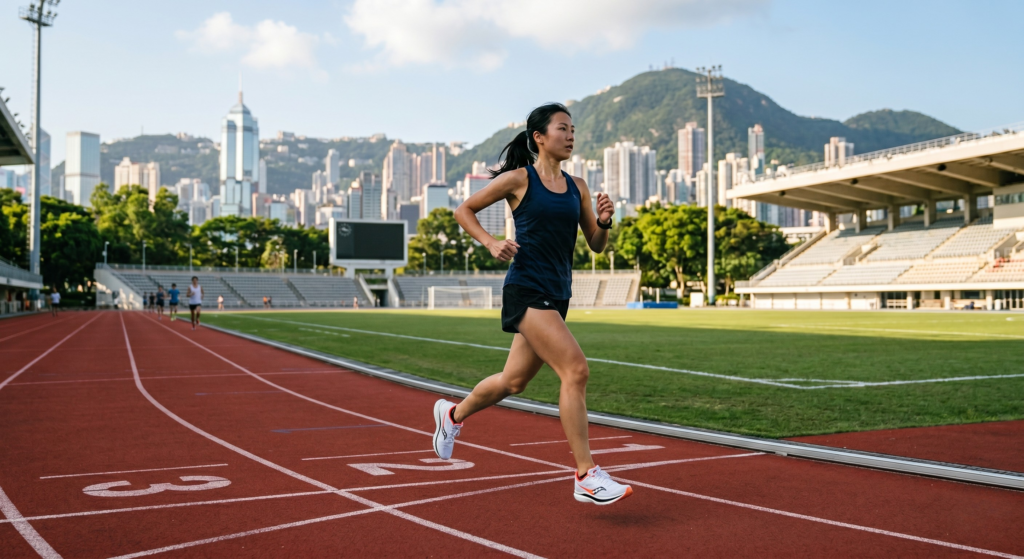
Running Isn't About Distance! Breaking Down the 3 Energy Systems & How to Run for Boxing

When people talk about boxing “Roadwork,” the classic image of Rocky running 10 kilometers at 5 AM often comes to mind. Roadwork absolutely has its value, but if you only jog 10km every day, you will step into the ring as a “heavy bag that can survive a long time, but has zero explosive power.”

The human body burns fuel in the ring using 3 major energy systems. Our running routines must use different distances and paces to target each one properly:

1. ATP-PC System ➔ Ultra-Short Sprints (10-30 meters)

  • Ring Application: When you spot an opening, slip, and fire off a lightning-fast 3-4 punch power combo. This split-second burst relies on the ATP-PC system. It offers the highest explosive power but depletes in seconds.


  • Running Drill: Find a straight track or a hill (Hill Sprints). Sprint at 100% max effort for 5 to 10 seconds (approx. 10-30 meters), then walk back slowly to let your heart rate fully recover (1-2 minutes). Repeat for 6-8 sets. The key is to go “all out” every time to train explosiveness, not endurance.
  •  

2. Glycolytic (Lactic Acid) System ➔ Mid-Distance Intervals (400m - 800m)

  • Ring Application: The core lifeblood of Olympic boxing! When you are engaged in a frantic firefight in the corner for 30 seconds and your arms burn with heavy fatigue—that is “lactic acid buildup.” Whoever has a higher “lactate threshold” can keep throwing punches despite the extreme burn.

 
  • Running Drill: Go to a running track and sprint 400 meters at maximum effort (finish within 1 to 1.5 minutes). Rest for 1 minute, and repeat for 4-6 sets. By the 3rd or 4th set, your legs will feel like they are filled with lead—congratulations, that is the exact feeling of lactic acid buildup in the ring! Survive this, and you won’t throw in the towel easily during a fight.

3. Aerobic System ➔ Long Slow Distance (5km - 10km)

  • Ring Application: Builds your foundational stamina. More importantly, it determines how fast you can flush out lactic acid and “recover” during that short 1-minute break between rounds.
  • Running Drill: Do a Long Slow Distance (LSD) run 1-2 times a week. Keep a pace where you can still hold a conversation (Zone 2 heart rate), running for 45 minutes to 1 hour. Do not run too fast! This builds a massive cardiovascular engine.
  •  
  • Hate Running? Also read: Why Do Boxers Jump Rope? 

Is Running Enough? A Former HK Team Member's Fight Prep Formula

Besides running, to truly solve the “gassing out” problem, your fight prep must include sport-specific, high-intensity training:

  • Lactate Threshold Bag Work: Do a 3-minute round on the heavy bag. For the first 2 minutes, focus on footwork and power punches. For the final minute, do a “Burnout”—throw straight punches at the bag at maximum speed and frequency without stopping! This drill will make your arms burn like crazy, forcing your body to adapt to “punching through fatigue.” (Note: High-intensity bag burnouts can easily compromise your form and lead to injury. Be sure to read 👉 Wrist Pain from Heavy Bags? 3 Causes and How to Fix Your Form!)

  • Fresh Man Sparring: Find two training partners with great stamina. You stay in the ring for 3 full rounds, but in each round, a brand-new, fully rested partner steps in to pressure you. If you can survive this hellish training, the actual fight will feel much easier.

Boxing Conditioning & Fight Prep FAQ

To give those preparing for a fight or just looking to get fit a clearer direction, we’ve compiled the 4 most frequently asked questions:

Q1: How early should I start conditioning for an amateur boxing match in Hong Kong?

A: You need a minimum of an 8 to 12-week training camp. The first 4 weeks build your aerobic base and strength; the middle 4 weeks focus on “lactate threshold training” and intense sparring simulations; the final 1 to 2 weeks (Tapering phase) reduce physical exertion to focus on speed, tactics, and weight management.

Q2: How do I cut weight for a fight without losing stamina?

A: True fight-prep weight cutting means controlling your diet early on to lose excess fat, then using “Water Loading” a week before the fight to flush out excess water weight. Never try to cut water by running in a sauna suit just days before the bout; this will severely drain your cardio and punch resistance.

Q3: Do I need to lift weights at the gym for boxing conditioning?

A: Absolutely, but not for Bodybuilding! We do functional training like Olympic lifts, Medicine Ball throws, and squat jumps to enhance the nervous system’s ability to recruit muscles quickly, boosting explosive punching power, rather than building bulky muscles that slow down your punches.

Q4: Is it useful to hit the heavy bag wearing an Elevation Mask?

A: An elevation mask only makes it harder to breathe, training your respiratory muscles, but it does not increase your red blood cell count like actual high-altitude training. Wearing it actually lowers your workout output intensity. To truly build conditioning, take the mask off and push your heavy bag intensity to 100%!

Conclusion: Smart Training Beats Hard Training

Victory in the ring never belongs to the guy who only knows how to blindly rush in; it belongs to the fighter who trains scientifically. By understanding your energy systems and doing targeted boxing conditioning, you can push through to the very last second and execute your techniques at 100%.

If you have doubts about your current conditioning, or if you are preparing for your first amateur bout, come find us at Chan Ka Wa Boxing. Our coaching team will assess your fitness level and tailor a personal conditioning program integrating the “Soviet Scientific System” to build you an unbreakable engine!

Need gear to handle intense sparring and bag work? A highly protective pair of gloves is a must: 👉 [The Beginner’s Guide to Choosing Boxing Gloves in 1 Picture]

Good boxing shoes help you move and generate power better: 👉 [2026 Boxing Shoes Guide: Running Shoes vs. Boxing Shoes? 12 Top Picks!]

Ready to break your physical limits? 👉 [WhatsApp us now to book a professional 1-on-1 boxing trial class!]