
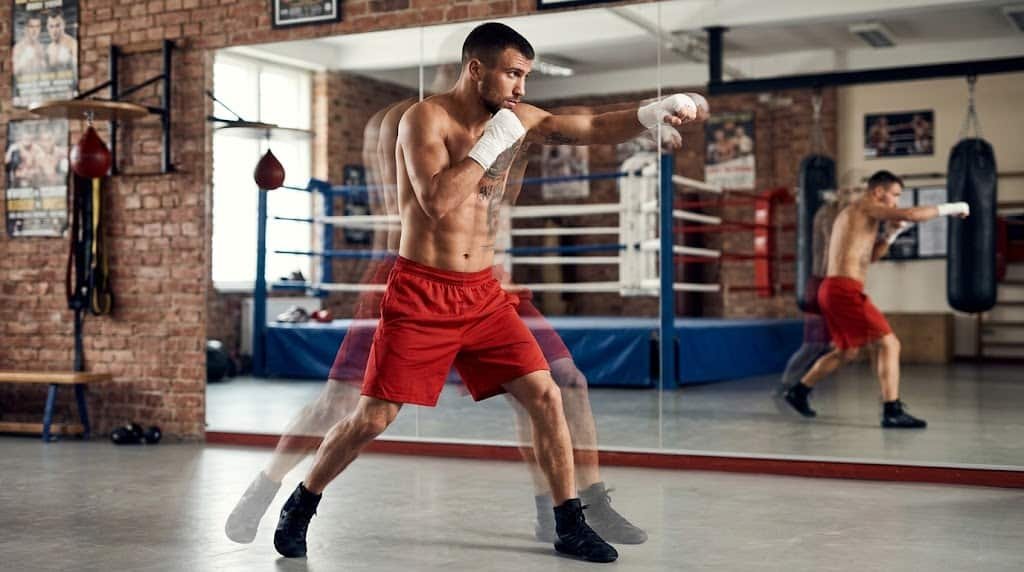

【Coach's Column】How to Shadow Box Like a Pro? A Former Olympian Breaks Down the 3 Core Benefits and Tactical Tips!
If you follow the world title fights of the four major boxing organizations (WBA, WBC, IBF, WBO) or watch pre-fight highlights on DAZN and ESPN, you’ve definitely seen stars like Canelo Alvarez or Vasyl Lomachenko throwing punches at the air in the ring. Their eyes are piercing, their footwork is light, and their punches slice through the air with a sharp whoosh.
This is the most core, yet most widely misunderstood, element of boxing training: Shadow Boxing.
Many friends in Hong Kong who just stepped into a boxing gym, or beginners trying to lose weight following YouTube videos at home, often feel “awkward” when shadow boxing. They feel like they are just “flailing randomly at the air.” But in reality, a star coach from any top promotional company (like Matchroom or Top Rank) only needs to watch you shadow box for 3 minutes to accurately assess your “Ring IQ” and technical proficiency.
In this article, using the analytical perspective of a former Hong Kong Olympic representative, I will deconstruct exactly how to shadow box properly and explain the irreplaceable role it plays in actual combat (or even just for fitness and fat loss)!
▍Why Do We Shadow Box? (The Three Core Functions)
Readers don’t just want to know how to do it; they want to know why. Compared to frantically hitting the Heavy Bag, Shadow Boxing serves entirely different training purposes:
Programming the Brain: Hitting a heavy bag provides a reactive force, and your muscles will start relying on that “hitting something” sensation to maintain balance. However, in a real fight, more than half of your punches will miss. Shadow boxing forces you to engage your core muscles to brake and stop the punch without any resistance, forging absolute, independent balance.
Establishing the “Imaginary Opponent” and Distance Control: This is the biggest difference between a rookie and a veteran. When a beginner punches the air, they are literally just punching the air. But in a veteran’s mind, a real fight is playing out. They are anticipating the opponent throwing a jab, slipping to the side, and firing back with a counter-punch.
The Seamless Connection of Footwork and Balance: There is an old saying in boxing: “Punches come from the ground up.” Combination punches without synchronized footwork are just flashy, powerless gestures. Shadow boxing is the only training that allows you to perfectly fuse footwork with punching in a completely pressure-free environment.
💡 Advanced Training Essential: Want to perfectly apply the footwork and distance control you honed in shadow boxing into dynamic training? You need a professional coach to feed you pads! Check this out: 👉 【Boxing Padwork】Just for Stress Relief? Former Olympian Breaks Down 5 Benefits and Rookie Mistakes
▍How to Shadow Box Effectively? Rookie Mistakes and an Olympian's Solutions
To transform “flailing at the air” into a “dress rehearsal for an epic battle,” you need technical insight. Let me break down a few key points for you:
1. Footwork First: Don’t Let Your Feet Betray You
Many beginners start throwing furious punches right out of the gate, resulting in their feet lining up like they are walking a tightrope. In the boxing world, a fighter with a leaky defense won’t last long.
Common Mistake: Your stance is too wide (losing height and space for rotational power) or too narrow (easily losing balance and getting knocked over by a single punch).
The Olympian’s Solution: Maintain a flawless Boxing Stance. Your feet should be angled at roughly 45 degrees, rear heel slightly elevated, with your weight distributed evenly (or slightly favoring the back foot). Only then can you effortlessly transition between attacking (like sliding forward with a jab) and retreating (sliding back to create distance).
2. Eyesight and the Imaginary Opponent (Visualizing the Opponent)
If you stare at the floor while shadow boxing, or zone out staring blankly at yourself in the mirror, those 3 minutes are completely wasted.
The Olympian’s Solution: Visualize an opponent who is roughly your height. When you throw a Jab, visualize it snapping onto their chin; when you throw a Hook, visualize it wrapping around their guard. Most importantly, you must visualize them fighting back! This leads to the next point.
3. Defense is Offense
Throwing punches feels great, but “retracting the punch” is an art form. When hardcore boxing fans watch fights, they often praise the counter-punching mastery of Floyd Mayweather or Lomachenko. All of that is built directly through shadow boxing.
Common Mistake: After throwing a 1-2 (Jab-Cross), your hands drop to your waist, and you stand there stiff as a board.
The Olympian’s Solution: Memorize this golden rule: “Every attack must be immediately followed by a defensive movement.” After throwing a combination, immediately execute a head movement—a slip, a roll, or simply take a step back. Ingrain defensive maneuvers deeply into your muscle memory.
💡 Decoding Ring Mastery: The art of defensive counter-punching isn’t just for traditional boxing; even elite MMA fighters train it obsessively! Check this out: 👉 【MMA Analysis】Why Do Elite UFC Fighters Train Pure Boxing? 5 Key Reasons
▍A Real-Combat Shadow Boxing Routine (Tailored for Hong Kong's Fast Pace)
Now that we understand the logic, let’s put it into practice. Hong Kongers live a fast-paced life, so I have designed a highly efficient, 9-minute Shadow Boxing routine. Download a Boxing Timer App, set the rounds to 3 minutes each, with a 1-minute rest in between.
Round 1: Footwork and the Educated Jab
Goal: Finding your ring awareness and distance.
Action: NO heavy power punches in this round. You are only allowed to move, throw the Jab, and the Double Jab. Coordinate this with stepping forward, backward, slipping left, and slipping right. Visualize using your jab to blind and disrupt your opponent, controlling the tempo of the entire ring.
Round 2: Combinations & Head Movement
Goal: Fluidity and defensive awareness.
Action: Start integrating the Cross and the Hook. Try classic combinations: 1-2 (Jab-Cross) -> Slip outside -> 3 (Lead Hook). After every combination you throw, your head must move off the centerline. Never give your imaginary opponent a stationary target to counter.
Round 3: The Championship Round (Full Simulation)
Goal: Exploding your stamina and Ring IQ.
Action: Treat these 3 minutes as the final round of a world title fight. Combine all your footwork, combinations, and defense. Visualize the opponent backing you into the ropes—how will you use a Pivot step to escape and fire a counter-punch? Maintain a sharp breathing rhythm (exhale sharply “Shh, Shh” on every punch), and keep that chin firmly tucked.
▍Conclusion: Seeing the Tangible in the Intangible
In the commercial world of boxing, promoters rely on packaged PR and trash talk to sell Pay-Per-Views. But the only reason a fighter can actually survive in the ring is due to the muscle memory accumulated day after day, throwing punches at a mirror in an empty gym.
Shadow boxing is absolutely not a casual warm-up; it is the ultimate moment to converse with yourself and inspect your own technical flaws. The next time you are at the gym or practicing at home, try applying the “Olympian’s tactical logic” outlined above. Your perspective on boxing will change entirely.
🥊 Ready to Translate Shadow Boxing into Real Ring Combat Skills?
Shadow boxing alone in front of a mirror always leaves blind spots! If you want to break through your bottlenecks, Chan Ka Wa Boxing is personally led by a former Hong Kong Olympic representative. We will help you meticulously correct your Boxing Stance, force generation, and counter-punching details. We reject directionless, blind grinding!
(Want to know why learning the fundamentals requires a professional coach? Check this out: 👉 【Boxing Guide】PT vs Group Class: Which is Better?

【Boxing News】Youth Olympic Boxing Decoded! HK Prospect Chan Yik Kan Heads to Africa
How brutal is Youth Olympic Boxing? A former Hong Kong Olympic representative breaks down the U19 World Boxing Championships and previews CKW Boxing prospect Chan Yik Kan’s upcoming expedition to Africa.

【Boxing Analysis】Why Did Cuban Boxing Decline? A Former Olympian Breaks Down 4 Brutal Truths
Once the untouchable gods of Olympic boxing, why has Cuba fallen from grace? A former Hong Kong Olympic representative analyzes the 4 brutal truths behind the decline of Cuban boxing, from scoring system changes to the rise of Central Asian fighters.

【Coach’s Column】Is Boxing Violent? Former Olympian Explains 3 Reasons Why Boxing is the Best “Antidote” for SEN Children!
Many parents think boxing is violent, but for SEN children (ADHD, Autism), it’s a miracle sport for training focus and emotional control! A former Hong Kong Olympic representative explains how padwork, footwork, and discipline rebuild confidence and coordination in kids with Special Educational Needs.
【Boxing Science】How to KO in Boxing? Former Olympian Unlocks 3 Essential Rules
Want to know how to KO in boxing? A former Olympic coach breaks down the science of knockouts, the kinetic chain, timing, and why headhunting gets you KO’d.

【Coach’s Column】Want to Learn Boxing But Afraid to Take the First Step? A Former Olympian Breaks Down 4 Mental Barriers and Prep Tips for Boxing Beginners
Want to learn boxing but worried about your fitness, coordination, or getting hurt? A former Hong Kong Olympic coach breaks down the 4 biggest mental barriers for boxing beginners and explains how to take your first step safely.

【Combat Mindset】Closing Your Eyes in Sparring? 4 Steps to Overcome Ring Fear
Terrified of your first boxing sparring session? A former Hong Kong Olympic representative explains how to stop flinching, control your vision, and use condition sparring to overcome ring fear and build real Ring IQ.