
[Coach's Column] Want to KO Your Opponent? A Former Olympian Unlocks the Science and 3 Essential Conditions Behind a Knockout

好多新手一學打拳就想學點樣 KO 人?以為力氣大、肌肉多就打得暈人?前香港奧運拳擊代表親自為你拆解 KO (Knockout) 背後嘅運動科學同人體力學。教你點樣運用動力鍊發力、時間差與死角,打出真正嘅毀滅性重拳!

“Coach, how can I KO my opponent with one punch? I want to drop someone like Mike Tyson or Naoya Inoue!”

In my 8-year coaching career, I’ve heard this countless times. Whether it’s a 20-something kid who just walked into the gym or a buff guy who bench presses 100kg, many people put on gloves for the first day with a Hollywood-style fantasy in their heads: throwing a massive, full-power haymaker that sends their opponent flying, followed by the roar of the crowd.

But as a former Hong Kong Olympic representative who has endured 5 years of high-intensity competition and fought life-or-death battles in the ring, I’m going to burst that bubble right now: a KO is never achieved through sheer brute force and anger.

In the boxing world, known as the “Sweet Science,” a KO is a highly precise physical and physiological equation. No matter how big your muscles are, if you don’t understand this equation, your heavy punches will just look like slow motion to an elite fighter. Today, using sports science and a former Olympian’s analytical eye, we will thoroughly deconstruct exactly how a “KO” happens, and why beginners who chase the KO often end up getting KO’d themselves!

▍The Physiology of a KO: Why Do People "Black Out"?

To KO someone, you first need to understand the human body’s “shut-off mechanism.” In professional boxing, the common KO/TKO falls into two categories, and the physiological principles behind them are completely different:

1. Head KO: The Brain’s “Restart Button”

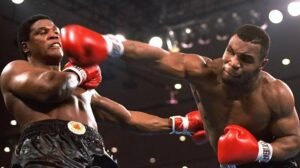
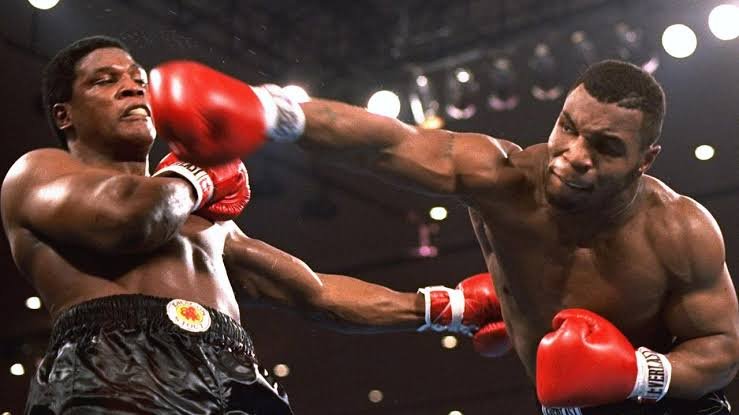
When you watch a fight and see a boxer take a punch to the chin, their legs give out, they drop straight down, or even lose consciousness—this is the classic Head KO. The principle behind it isn’t that you broke their bones, but rather a Concussion. The human brain floats in cerebrospinal fluid. When the chin (one of the longest levers in the human body) takes a massive lateral or rotational impact, the skull snaps violently, causing the brain to smash against the inner skull wall. To protect itself, the nervous system instantly cuts the power, causing the body to lose consciousness and balance. This is why the chin is known as a boxer’s “Off Button.”

2. Body KO: The Soul-Crushing Liver Shot

Another extremely brutal type of KO is the body shot. The liver is hidden just beneath the ribs on the right side of the human body; it is dense with nerves and lacks complete muscle protection. When a precise left hook to the body delivers a heavy blow to the liver, it triggers a severe reflex in the Vagus nerve. This causes a sudden drop in blood pressure, a slowed heart rate, and spasms in the diaphragm. A boxer who takes a liver shot is completely conscious, but their body becomes entirely paralyzed by the extreme agony and nerve shock, leaving them with no choice but to kneel painfully on the canvas.

💡 Classic KO Relived: Want to see how a god-tier liver shot ends a fight? Japan’s “Monster” Naoya Inoue is the perfect example! Check this out: 👉 Boxing Analysis: The Monster vs. The Flash! A Former Olympian Breaks Down Inoue vs. Donaire

▍Why Doesn't Brute Force Cause a KO? The 3 Absolute Conditions

Many beginners think that as long as they plant their feet, flex their arm muscles, and swing with all their might, they can KO their opponent. Dead wrong. A true KO requires meeting the following three conditions simultaneously:

Condition 1: Kinetic Chain — Not Just Pushing the Heavy Bag with Dead Strength

I always tell my muscular students: the “dead strength” you build in the gym won’t knock anyone out. If you only use your arm and shoulder muscles to push that punch out, the force is, at best, limited to the weight of your upper body. A truly devastating heavy punch relies on a bottom-up Kinetic Chain:

  • Foot drive: Borrowing the reaction force from the ground.

  • Knee and Hip Rotation: Torquing the lower body’s power upwards.

  • Core transmission: Bracing the abdomen to lock the power in place.

  • Shoulder and knuckle release: At the final fraction of a second before impact, the fist instantly clenches (the snap), whipping the entire body’s weight into the opponent.

A punch without hip rotation or footwork coordination has absolutely no penetrating power. In our compact boxing gym in Hong Kong, the “Russian Style” we teach heavily emphasizes using the rebounding momentum of the Pendulum step to amplify this kinetic chain.

💡 Fix Your Punching Habits: Are you suffering from “Heavy Bag Hero Syndrome,” only knowing how to push the bag with dead strength? Check this out: 👉 Beginner’s Must-Read: No Progress After 6 Months of Boxing? A Former Olympian Breaks Down 7 Fatal Rookie Mistakes in HK!

Condition 2: Timing — “The Punch You Don’t See is the Deadliest”

There’s a golden rule in the boxing world: “The punch that knocks you out is the one you don’t see coming.”

If your opponent clearly sees you winding up and swinging, their brain will instinctively send a signal to brace their neck muscles for impact. As long as the neck is stiff enough, the brain’s whiplash margin is drastically reduced, making it very hard to knock them out. How do elite fighters score KOs? Through Counter-punching and Timing. They will throw an intercepting punch using a shorter trajectory right in that 0.1-second window when the opponent is mid-swing, leaning forward, and their chin has left its guard. When the opponent’s brain is completely off-guard and their neck is relaxed, even a medium-power straight punch is enough to shut the lights out.

Condition 3: Accuracy & Angles — The Embodiment of Ring IQ

“Hitting hard is not as good as hitting accurately.” If you hit a solid forehead or a tight guard with 100 pounds of force, you’ll likely just hurt your own hand while your opponent feels nothing. But if you hit the very tip of your opponent’s chin (leverage) with 50 pounds of force, the resulting rotational force is lethal enough.

To hit accurately, you must know how to create Blind Spots. Elite champions won’t stand right in front of you and trade power. They will use the jab to obscure your vision, then pivot on their lead foot to step to your side. While you are still defending straight ahead, their fatal hook is already crashing in from your blind spot. This is what we call Ring IQ.

💡 Witness Elite Ring IQ: The difference between a contender and a champion is exactly this ability to create blind spots and set traps! Check this out: 👉 Coach’s Column: A Former Olympian Explains the Decisive Gap Between Contenders and Elite Champions! The Secrets of Ring IQ and Footwork

▍The Price of "Headhunting": Why Chasing the KO Gets You KO'd

Many beginners stepping into the ring for their first sparring session have only one thing on their mind: blowing the opponent’s head off with one punch (known in the industry as Headhunting). The results are usually disastrous. Why?

1. Compromised Form and Telegraphing When your mind is solely set on a KO, your shoulders will involuntarily shrug, your muscles will tense up, and you’ll habitually pull your hand back to wind up before punching. To a trained coach or a seasoned veteran, these prep movements are as loud as an air raid siren. The moment you move, they’ve already dodged and served you a counterpunch.

2. Forgetting to Breathe (Gassing Out) To throw a heavy punch, beginners usually hold their breath to exert force. After throwing a dozen full-power misses, your muscles will rapidly accumulate lactic acid due to oxygen deprivation. In less than two minutes, your arms will be too heavy to lift, your footwork will turn sloppy, and even your guard will drop.

3. Exposing the Chin as a Live Target It’s a law of physics: every action has an equal and opposite reaction. When you throw a massive sweeping hook with all your might, your center of gravity will inevitably pitch forward, and the chin on the opposite side of your face will be 100% exposed to the air. All your opponent has to do is slightly slip and land a short, crisp counter, and the one getting KO’d will be you.

💡 Sparring Mindset Adjustment: Feeling terrified or nervous before stepping into the ring? Forgetting to breathe as soon as sparring starts? You need to reshape your combat psychology! Check this out: 👉 Combat Mindset: Closing Your Eyes During Your First Spar? A Former Olympian Teaches You 4 Steps to Overcome Ring Fear and Defensive Blind Spots

▍Conclusion: A KO is a "Result", Not a "Goal"

Having coached for so many years, I’ve always instilled one concept in my students: never forcefully chase a KO. A KO isn’t something you can just will into existence; it is a natural result that happens when you execute your fundamentals, footwork, distance control, and tactics to absolute perfection.

That shocking 3-second KO you see in the ring is actually backed by countless rounds of setting up jabs, testing the distance, downloading the opponent’s data, and meticulously laying traps to force an error.

Want to learn how to truly unleash devastating power? First, let go of your obsession with brute force. Go back to the mirror, fix your Boxing Stance, feel the weight transfer beneath your feet, throw your jab straight and relaxed, and tuck your chin.

The Sweet Science has always belonged to those who box with their brains.

🥊 Want to Truly Master the Art of the Heavy Punch and Counter-Punching?

Stop pushing the heavy bag with dead strength in a generic gym, or swinging blindly in a massive group class! What you need is a force-generation mechanism and tactical guidance that aligns with modern sports science.

Chan Ka Wa Boxing is personally led by a former Hong Kong Olympic representative, holding nothing back in passing down 5 years of intense ring experience and 8 years of coaching expertise. We will break down the kinetic chain, Russian footwork, and precise distance control for you from scratch.

👉 Click Here / WhatsApp Us Now to book your 【1-on-1 Pro Boxing Trial with a Former Olympian】 and uncover the true explosive power hidden within your body!