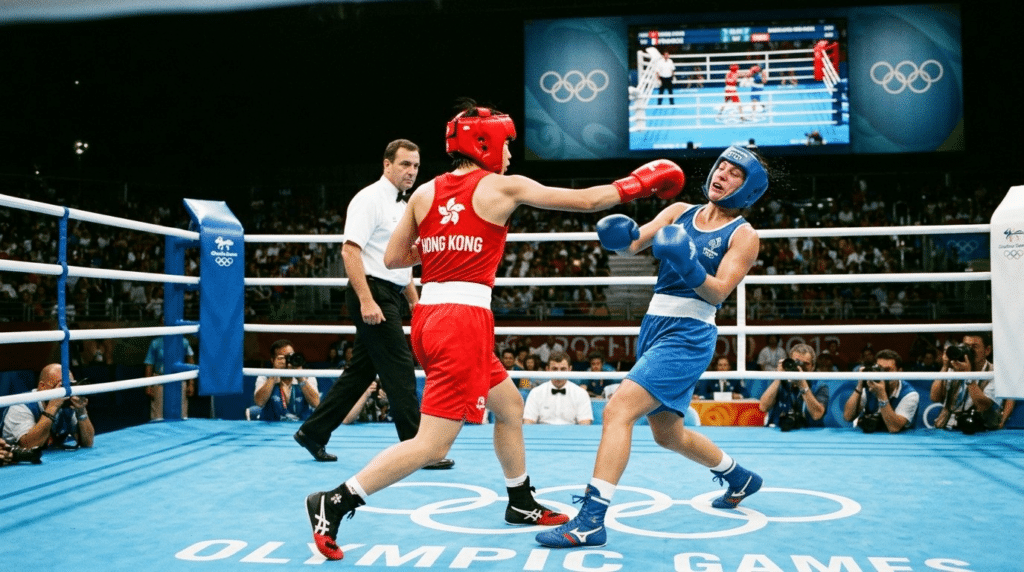
The Ultimate Hong Kong Boxing Guide: From the Heavy Bag to the Olympic Ring? A Complete Breakdown of World-Class Tournaments and the HK Team Pathway
Every time you sweat it out in the gym, listening to the crisp “smack” of your gloves hitting the heavy bag, do you ever imagine yourself standing under the spotlight with the whole arena cheering your name?
In recent years, the boxing scene in Hong Kong has boomed. From office workers looking to keep fit and relieve stress, to passionate fighters training day and night to make a name for themselves, the local boxing community is expanding rapidly. But when you watch world-class champions battling it out on YouTube and feel that fire ignite inside you, do you actually know what your first step should be if you want to represent Hong Kong?
“I want to compete, but I don’t know what tournaments are out there.” This is the biggest pain point for countless amateur boxers in Hong Kong.
Today, we are doing a deep dive. From decoding the halls of world-class boxing to breaking down the exact ladder for Hong Kong enthusiasts: Beginner ➔ Local Champion ➔ Hong Kong Team ➔ Olympic Stage. Whether you are a rookie looking to start or a prospective athlete ready to make waves, this guide will serve as your ultimate strategic blueprint!
Chapter 1: Looking Up at the Stars — The World-Class Professional Boxing Organizations You Must Know
If you want to become a fighter, you first need to understand the landscape. The highly entertaining, multi-million dollar mega-fights we watch on Pay-Per-View almost entirely belong to Professional Boxing. In the pro system, there are four unshakable pillars, commonly known as the “Four Major Boxing Organizations.” Each has its own independent ranking system and championship belts:
Decoding the Four Major World Boxing Organizations
| Organization | Full Name & Est. | Characteristics & Status | Iconic Figures / Traits |
| WBA | World Boxing Association (1921) | The oldest organization, effectively the “big brother” of boxing. Historically dominated title fights and holds immense prestige. | Legendary champion Muhammad Ali won the WBA belt multiple times. |
| WBC | World Boxing Council (1963) | The iconic “Green Belt” is deeply rooted in pop culture. Boasts a highly refined rule system and is arguably the most commercially successful and influential organization today. | Pioneered innovative rules to protect fighters, such as mandatory pre-fight weigh-in mechanisms. |
| IBF | International Boxing Federation (1983) | Though established later, it is famous for its strict ranking system and mandatory challenger enforcements. They absolutely do not allow champions to “duck” fights, giving them high credibility. | The ranking system is recognized as the most transparent—skill speaks loudest here. |
| WBO | World Boxing Organization (1988) | Grew rapidly in recent years, turning many modern boxers into superstars. Initially underestimated, its champions are now universally recognized as world-class. | Filipino icon Manny Pacquiao was historically one of the WBO’s biggest draws. |
Brand Manager Strategic Insight: From a marketing perspective, these four organizations are essentially four different top-tier marketplaces. When a pro fighter defeats all opponents and unifies these four belts simultaneously, they are crowned the “Undisputed Champion.” This isn’t just about glory; it is the ultimate maximization of their commercial Lifetime Value (LTV)!
Chapter 2: Shattering the Myth — Amateur vs. Professional Boxing
Many beginners have a fatal misconception: “Amateur boxing means you’re just playing around; Professional (Pro) means you’re a true master.”
Absolutely false! In the boxing world, “amateur” does not mean poor technique; it simply represents a different rule set and objective. The monsters fighting for gold medals at the Olympics all belong to the “amateur system.” Let’s compare them using data and rules:
1. Game Pacing
- Amateur (Olympic System): Usually 3 rounds, 3 minutes per round. Because the time is so short, fighters must operate at 100% explosive power from the opening bell to score points. The pace is lightning-fast, footwork is highly agile, and it demands high-frequency effective striking with virtually zero margin for error.
- Professional Boxing: Ranges from 4 rounds for debutants to 12 rounds for world title fights. This is a marathon. It requires stamina management, tactical setups, and knockout power, with fighters often conserving energy for the later rounds to seek a KO.
2. Scoring System
- Amateur (Olympic System): Focuses heavily on landing clean shots on valid target areas (head, front of the torso). Although they have recently adopted the 10-point must system, the judging philosophy still tends to reward comprehensive technique, active offense, and tight defense.
- Professional Boxing: Uses a strict 10-Point Must System. Beyond mere punch counts, judges heavily weigh “Damage,” “Ring Generalship,” and “Effective Aggressiveness.” Being knocked down usually results in an automatic point deduction.
3. Equipment & Safety
- Amateur (Olympic System): While high-level elite men’s competitions have removed headgear, amateur bouts still have strict regulations on glove weight (usually 12oz or 16oz, depending on weight class). The glove design absorbs more impact to protect the athletes.
- Professional Boxing: No headgear, using thinner gloves with a harder striking surface (usually 8oz or 10oz). It is true “flesh-to-bone” combat, leading to a significantly higher KO rate.
Chapter 3: The Combat Map — The Local Advancement Ladder for Hong Kongers
After looking at the world stages, it might feel out of reach. But the truth is, the boxing ladder in Hong Kong is incredibly clear. If you want to transition from a casual enthusiast to a registered athlete, you need to follow this “Combat Map”:
Step 1: Find an Affiliated Gym and Register (Acquisition)
You cannot just train in a park and sign up for a tournament yourself. You must join a registered affiliated club under the Boxing Association of Hong Kong, China (BAHK). Find a gym with professional coaches and excellent instruction. Through your coach’s evaluation and recommendation, you will officially register as an athlete for that year. This step is equivalent to opening your “career portfolio.”
Step 2: From "Novice" to "Local Tournaments" (Engagement & Testing)
The Association hosts multiple events annually at venues like the Pei Ho Street Sports Centre in Sham Shui Po.
If you have never competed, you start in the Novice category, facing opponents with similar limited experience.
Once you gain experience, you enter the Local Tournaments (Points Races). Bouts are categorized by age (e.g., U17, U19, Elite Adults) and weight class. A win gives you 3 points; a loss still yields 1 point. You need to consistently compete, accumulate real-world data, and fight your way to the top of your weight class rankings.
Step 3: Fight for the HK Championship Belt (Conversion)
When you perform exceptionally well in the local tournaments and accumulate enough points (e.g., top 4 in your weight class), you advance to the annual Hong Kong Boxing Championships (Semi-finals and Finals) held at the end of the year. This event gathers the absolute best amateur fighters in the city. If you can win here and strap on that Hong Kong Championship belt, you are officially the number one fighter in your weight class!
Chapter 4: Wearing the Bauhinia — The Path to the Hong Kong National Team
Winning the Hong Kong Championship doesn’t automatically mean you get to wear the Bauhinia emblem and compete overseas. To become a member of the “HK Team,” you face an even more grueling test.
Team Trials and Hellish Training Camps
The BAHK typically holds internal Trials ahead of major international competitions (like the Asian Games or Asian Championships). Even if you are the local champion, you must pass the coaching staff’s strict evaluations.
Once selected for the Hong Kong Representative Team (or the Elite Training Squad), your life will undergo a massive transformation:
High-Frequency Training: You may endure upwards of a dozen sessions a week, encompassing technique, strength & conditioning, and hard sparring.
Scientific Preparation: Training is no longer based on “feeling.” You must utilize sports science—monitoring heart rate zones and lactate thresholds—and work with nutritionists for precise weight cuts to ensure you make weight while retaining maximum power.
Brand Manager Strategic Insight: At this stage, a fighter must possess “Data Translation” skills. You cannot just blindly push forward; you must know how to read your body’s recovery metrics. Overtraining is exactly like burning through your entire ad budget with zero conversions (a terrible ROAS). Smart fighters know how to strike the perfect balance between training volume and recovery.
Chapter 5: Going Global — The Four Ultimate Stages of Amateur Boxing
When you officially represent Hong Kong, your opponents will be monsters from boxing powerhouses like Kazakhstan, Uzbekistan, China, and Cuba. Here are the four world-class stages every HK team boxer dedicates their sweat and youth chasing:
- Value: The highest level single-sport tournament in the Asian region
- Strategic Significance: This is the ultimate testing ground for a Hong Kong fighter’s continental standing. Central Asian countries dominate boxing; reaching the quarter-finals or winning a medal here proves you possess tier-one Asian capability. It is also a critical metric for securing more elite funding from the Hong Kong Sports Institute (HKSI).
- Value: A comprehensive sporting event with massive city-wide attention.
- Strategic Significance: Held every four years, the Asian Games are incredibly meaningful for HK athletes. Not only does it generate massive media exposure, but recent iterations have also served as continental qualifiers for the Olympics. Winning glory for HK on this stage is the ultimate goal for countless athletes.
3. World Boxing Championships
- Value: The highest single-sport honor for the world’s best amateur fighters.
- Strategic Significance: The competition level is astronomical, and the physicality is extreme. It is a showcase of the world’s superpowers from Europe, the Americas, and Asia. Competing here and facing Cuban footwork or Soviet-style power punches is an invaluable experience for any Hong Kong boxer.
4. Olympic Games
Value: The highest temple any athlete spends their life striving toward.
Strategic Significance: Securing an Olympic ticket is agonizingly difficult. Hong Kong fighters usually have to battle through continental qualifiers (like the Asian Games) or the final World Olympic Qualification Tournaments. When you walk into the Olympic village and step into that ring, you no longer just represent yourself—you represent the pride of the entire Hong Kong boxing community. Very few in HK history have reached this stage; it is where history is made.
Chapter 6: An Alternative Route — Professional Boxing in Hong Kong
Of course, if your natural style leans heavily toward knockout power and you dislike the short, high-frequency pacing of amateur boxing, there is a professional pathway in Hong Kong.
Over the past decade, Hong Kong has produced internationally recognized pro fighters like the “Wonder Kid” Rex Tso. Currently, there are local Promotions that regularly host professional boxing events.
Building a Record (BoxRec): The most important asset for a pro fighter is their ranking on the official database, BoxRec. You can start in 4-round “HK Pro Boxing Rookie bouts,” slowly accumulating a winning streak to boost your ranking.
Commercial Value: Taking the pro route means you must operate yourself as a “Brand.” Besides fighting well, you must master promotional skills (Omnichannel Fluency), manage your social media, and attract sponsors. Only fighters with box-office draw have the opportunity to challenge for Asian or intercontinental belts (such as the WBO Asia Pacific titles).
Conclusion: Take the First Step and Turn Dreams into Reality!
Boxing has never been just physical labor; it is a high-intensity game of intellect and willpower. From a standard heavy bag in a local gym to the world-class Olympic ring or a fight for a professional belt, the road is paved with sweat, injuries, and countless moments of wanting to quit.
But just like in Marketing, a strategy without execution is just empty talk.
You now understand the complete ecosystem of Hong Kong boxing. The blueprint—from the four major organizations to the national team ladder—is in your hands. Your biggest enemy right now isn’t the opponent across the ring; it is your own hesitation.
Stop making excuses! If the fire inside you is still burning, take action today:
Find a qualified gym with professional coaches.
Book your first real training session.
Set your very first goal: Registering for next year’s Novice Tournament.
The ring is ready for you. The spotlight is waiting to be turned on. Wrap your hands, put on your gloves, and starting today, use your fists to write your own chapter in Hong Kong’s boxing history!

Hong Kong Boxing Guide: From Local Gyms to the Olympic Ring
Want to compete in boxing in Hong Kong? Discover the ultimate pathway from local gyms to the Olympic ring. Learn about BAHK, pro vs amateur, and how to start!

[Hong Kong Boxing History] From Southorn Stadium to Queen Elizabeth Stadium | HK Team Coach Explains
Did boxing in HK start as street fights? Discover the true history of Hong Kong boxing with former HK Team coach Chan Ka Wa! From the grassroots passion of Southorn Stadium to Rex Tso’s boxing mania, learn how boxing became HK’s trendiest sport.

[Boxing Padwork Guide] Heavy Bag vs Pads? 5 Benefits & Beginner Mistakes
Is boxing padwork just for stress relief? A former HK Team coach breaks down the 5 true benefits of boxing pad training, heavy bag vs pads, and how to fix common beginner mistakes.

[2026 HK Boxing Guide] Boxing in Hong Kong: Classes, Prices & Beginner Tips
Looking to learn boxing in Hong Kong? A former HK Team coach breaks down everything beginners need to know: Boxing vs. Muay Thai, gym prices, PT costs, required gear, and amateur competitions!

[HK Boxing Competition Guide] Want to Step Into the Ring? A Former HK Team Coach Breaks Down 3 Amateur Boxing Tiers & BAHK Entry Rules
Itching to fight HK Boxing Competition? Former HK Team coach Chan Ka Wa breaks down the ultimate Hong Kong boxing competition guide! From inter-club smokers and White Collar Boxing to BAHK Novice and Points Tournaments, learn the entry requirements and fight prep strategies.

Boxing History Unlocked: Why Fitness Boxing is HK’s Trendiest Workout
Think boxing is just for fighters? Discover the history of the Sweet Science and learn why Fitness Boxing has become the ultimate fat-burning and stress-relieving workout for beginners in Hong Kong. Read our beginner FAQ!