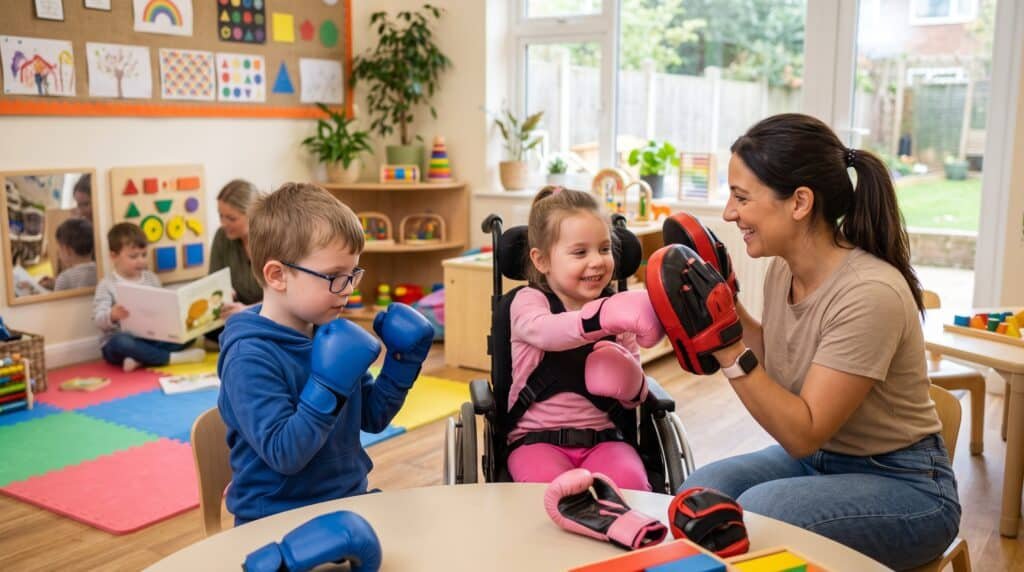
【Coach's Column】Is Boxing Violent? Former Olympian Explains 3 Reasons Why Boxing is the Best "Antidote" for SEN Children!
In my 5-year full-time coaching career after retiring as a former Hong Kong Olympic boxing representative, apart from helping office workers lose weight and training boxing enthusiasts for sparring, I have also met many special little guests brought to the gym by their parents. When these kids walk into the gym, their eyes are either wandering restlessly, or they are extremely introverted, avoiding everyone’s gaze. Parents usually come to me with a tired look, saying: “Coach, my kid has SEN. We’ve tried many sports, but none worked. We want to see how boxing can help him.”
When many Hong Kong people hear the word “boxing,” the first things that come to mind are blood, violence, and street fights. Isn’t putting a child with Special Educational Needs (SEN) in the boxing ring like adding fuel to the fire?
If you think this way, it proves your understanding of “The Sweet Science” is not deep enough. Boxing has never been a simple outlet for violence; it is a high-IQ sport that demands extreme discipline, focus, rhythm, and physical coordination. Today, using my practical coaching perspective, I will deeply break down what SEN is and explain why hardcore boxing is actually the best “antidote” to save these children.
▍I. What is SEN (Special Educational Needs)? The Real Dilemma Parents Face
SEN stands for Special Educational Needs. In Hong Kong, common SEN students are divided into several major categories. In the boxing gym, the three types we encounter most often are:
ADHD (Attention Deficit / Hyperactivity Disorder): These children’s brains are like super motors but without brakes. They are terrifyingly energetic, unable to focus their attention for more than a few minutes, impulsive, and are often punished by teachers at school for “not sitting still” or being “fidgety.”
ASD (Autism Spectrum Disorder): They face barriers in social interaction and communication, often not knowing how to express their emotions. They require extremely structured routines and may have hypersensitive reactions to sound, light, or touch (Sensory Overload). When encountering sudden changes, they are prone to emotional meltdowns.
DCD (Developmental Coordination Disorder): Commonly known as being “clumsy,” their left and right brain coordination is extremely poor. They trip easily while walking and can’t even perform simple actions like throwing and catching a ball. Because of this, they are often marginalized by classmates in PE classes and severely lack confidence.
For SEN parents, every day is an uphill battle. Forcing them to sit still and do homework? Impossible. Taking them to play soccer or basketball? The large group teaching environment is far too noisy, and the coaches simply cannot cater to their special needs, which usually ends in them being neglected or throwing a tantrum.
▍II. Why is Boxing a "Miracle Sport" for SEN Children?
The reason boxing works wonders for SEN kids is that the core logic of boxing training perfectly addresses their brain and physical deficits. Here is a scientific breakdown based on my years of practical experience in the gym:
1. Treating ADHD: Hyper-focus and Dopamine Release
Children with ADHD do not lack focus; rather, their brains require a very high intensity of stimulation to produce enough dopamine to allow them to focus.
When they stand in the ring facing the coach’s Focus Mitts, the situation is completely different. Boxing is a sport of “instant feedback.” When the coach raises the left hand, you must instantly throw a right cross; when the coach throws a wide hook, you must immediately duck and roll. In this 1-on-1, high-pressure interaction, the child’s brain is forced into a state of “Hyper-focus.” Because if they get distracted even slightly, they will miss the pad or fail to dodge. Every time they accurately hit the focus mitts and hear that crisp “pop” sound, their brain releases a massive amount of dopamine, giving them immense satisfaction while systematically burning off their restless, excess energy.
💡 The Magic of Padwork: Hitting the pads is definitely not just randomly swinging your arms; it’s the ultimate method for training brain reflexes and focus! Read more: 👉 [【Boxing Padwork】Just for Stress Relief? Former Olympian Breaks Down 5 Benefits and Rookie Mistakes]
2. Treating ASD: Routine “Number Codes” and Proprioception
Children with Autism (ASD) are terrified of chaos and unpredictable things; they seek order. Boxing is exactly a language full of order.
When teaching SEN kids, we don’t use profound theories; we use “numbers.” “1 is the left jab, 2 is the right cross, 3 is the left hook. Now throw a 1-2-3.” These fixed combination punches act as a clear set of codes for ASD children. Once they master this routine, they feel incredibly safe and comfortable.
At the same time, hitting the Heavy Bag provides intense proprioceptive input. ASD students often lack an awareness of their body’s position in space. When they strike a heavy bag with their fists, that solid reactive force transmitting back into their muscles and joints effectively stabilizes their nervous system and reduces anxiety.
3. Improving Coordination Disorders (DCD): Rebuilding the Brain’s “Kinetic Chain”
Uncoordinated limbs? Boxing is the best engineering project to repair coordination skills.
Throwing a punch is never just about the hands. We teach kids to start from the “soles of their feet”: front leg slightly bent, rear heel elevated; when throwing a straight punch, the rear foot must pivot, twisting the hips and transferring the power up to the shoulders. This is the so-called Kinetic Chain. Boxing requires highly demanding movements that involve Crossing the Midline (e.g., when throwing a left cross, the body must twist to the right). These movements force intensive neural communication between the left and right hemispheres of the brain. Combined with the “Pendulum Step” unique to Russian-style boxing, you will slowly see a kid who used to trip over their own feet walking, suddenly moving nimbly back and forth in the ring.
💡 Rebuilding Coordination and Footwork: Don’t think footwork is just for adults to learn; kids learning footwork has a decisive impact on their physical coordination! Read more: 👉 [【HK Boxing Gym Guide】Gym Too Small for Footwork? Former Olympian Explains the Spatial Mastery of “Russian Boxing”]
4. Emotional Control and Resilience: Learning to Breathe in the “Abyss”
The biggest headache for parents of SEN students is their emotional “Meltdowns.” Whenever they encounter a setback or feel tired, they cry, throw things, and give up.
Boxing is an extremely physically draining sport. When a child reaches the third round—when their hands hurt, their legs are sore, and they can’t catch their breath—their instinctive reaction is definitely to throw a tantrum. This is the absolute best time for the coach to intervene. We do not spoil them, nor do we yell at them. We stop, tell them to look the coach in the eyes: “Deep breath. In, out. I know you’re tired, but you can throw two more punches. Hands up.”
The ring is a safe laboratory for experiencing setbacks. Here, they learn that “being tired doesn’t mean giving up” and “making a mistake isn’t the end of the world.” When they grit their teeth and finish that final 10-second blitz, the self-confidence earned through sweat and perseverance is something no verbal “good job” can ever match.

▍III. A Former Olympian's "Tough Love" Philosophy: Don't Treat Them Like Glass
Many people ask me: “Coach, when dealing with SEN students, do you have to be extra gentle and speak very softly?”
My answer is: You must be patient, but you absolutely cannot treat them like fragile glass.
Many parents in Hong Kong, out of a desire to protect, tend to over-accommodate SEN students, even lowering standards. But in the boxing gym, I believe in “Tough Love” (being strict but caring). The ring is fair; whether you have SEN or not, if you drop your hands, you leave an opening.
My requirements for SEN students are just as strict as those for regular students:
You must greet loudly when entering the gym.
Once you put the gloves on, no playing around.
Hitting the wrong pad is fine, but throwing a tantrum is not allowed; if you do it wrong, you do it again.
These children are actually much smarter than adults think, and they desperately need clear boundaries. When a coach establishes a fair, disciplined, yet trusting environment for them, their potential often explodes to a level that even their parents can’t believe.
💡 Environment Determines Success: SEN children are extremely susceptible to environmental distractions. Want to know why group classes might cause them to melt down, and why 1-on-1 training is the way out? Read more: 👉 [【PT vs Group Classes】Which is Better? The Real Value of 1-on-1 Boxing Training in HK]
▍Conclusion: The Glimmer of Light Inside the Gloves
Teaching SEN students is never an easy task. Sometimes, in a 60-minute class, you might have to spend 20 minutes soothing their sudden emotional outbursts; sometimes, you have to repeat the same footwork drill for three months before they finally grasp it.
However, when you see an autistic child—who initially wouldn’t dare look anyone in the eye—take the initiative to walk up and give you a fist bump; when an ADHD boy, who used to require weekly parent-teacher meetings at school, calmly and highly focuses through three rounds of padwork, you realize that all the sweat is worth it.
The Sweet Science is not just a combat sport; for these children, it is a bridge to rebuild their neural pathways and rediscover their self-worth.
If your child is going through similar challenges, don’t feel discouraged. Bring them to the boxing gym. Allow them to sweat, allow them to face setbacks, and then witness how they carve out their own path in the ring. Have you ever considered that the energy in your child, which is often labeled as “hyperactive,” might actually be the greatest natural talent for becoming an excellent boxer?

【Boxing News】Youth Olympic Boxing Decoded! HK Prospect Chan Yik Kan Heads to Africa
How brutal is Youth Olympic Boxing? A former Hong Kong Olympic representative breaks down the U19 World Boxing Championships and previews CKW Boxing prospect Chan Yik Kan’s upcoming expedition to Africa.

【Boxing Analysis】Why Did Cuban Boxing Decline? A Former Olympian Breaks Down 4 Brutal Truths
Once the untouchable gods of Olympic boxing, why has Cuba fallen from grace? A former Hong Kong Olympic representative analyzes the 4 brutal truths behind the decline of Cuban boxing, from scoring system changes to the rise of Central Asian fighters.

【Coach’s Column】Is Boxing Violent? Former Olympian Explains 3 Reasons Why Boxing is the Best “Antidote” for SEN Children!
Many parents think boxing is violent, but for SEN children (ADHD, Autism), it’s a miracle sport for training focus and emotional control! A former Hong Kong Olympic representative explains how padwork, footwork, and discipline rebuild confidence and coordination in kids with Special Educational Needs.

【Boxing Science】How to KO in Boxing? Former Olympian Unlocks 3 Essential Rules
Want to know how to KO in boxing? A former Olympic coach breaks down the science of knockouts, the kinetic chain, timing, and why headhunting gets you KO’d.

【Coach’s Column】Want to Learn Boxing But Afraid to Take the First Step? A Former Olympian Breaks Down 4 Mental Barriers and Prep Tips for Boxing Beginners
Want to learn boxing but worried about your fitness, coordination, or getting hurt? A former Hong Kong Olympic coach breaks down the 4 biggest mental barriers for boxing beginners and explains how to take your first step safely.

【Combat Mindset】Closing Your Eyes in Sparring? 4 Steps to Overcome Ring Fear
Terrified of your first boxing sparring session? A former Hong Kong Olympic representative explains how to stop flinching, control your vision, and use condition sparring to overcome ring fear and build real Ring IQ.