

【Combat Mindset】Closing Your Eyes During Your First Spar? A Former Olympian Teaches You 4 Steps to Overcome Ring Fear and Defensive Blind Spots
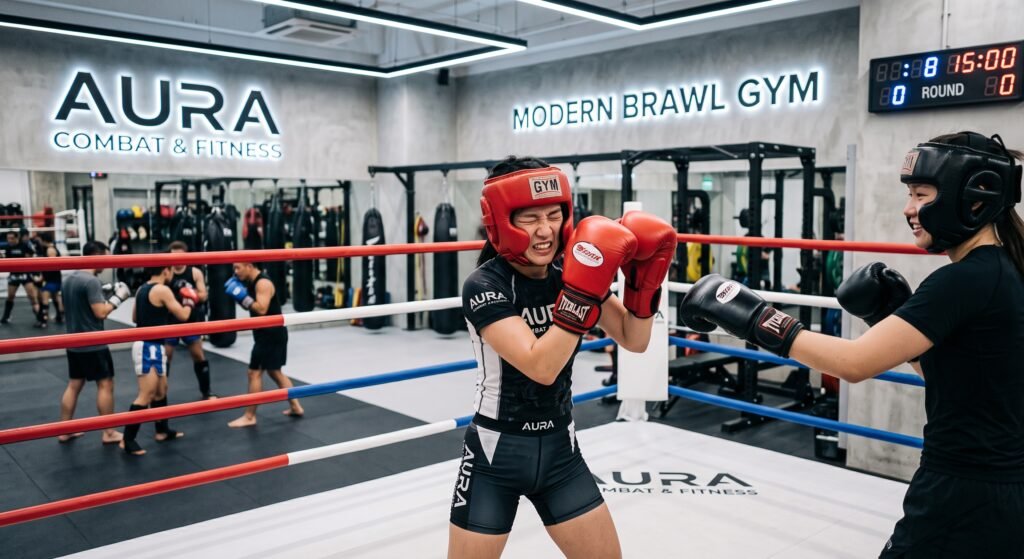
In my 8 years as a full-time coach and 5 years of high-intensity competitive fighting, I have seen countless “Heavy Bag Heroes” in the gym. Normally, they smack the heavy bag with deafening power, have stamina through the roof, and hit the pads with terrifying explosiveness. But the moment they put on headgear, bite down on a mouthpiece, and step into the ring for their very first sparring session, they turn to stone. Their footwork stiffens, their hands drop, and their first reaction to an incoming punch is to close their eyes, turn their head, or even turn their back to the opponent.
After stepping out of the ring, they often feel a massive sense of defeat, doubting whether they are even cut out for boxing. This is the biggest bottleneck every beginner will inevitably face.
As a former Hong Kong Olympic boxing representative, I’m going to tell you this as directly as possible: Being scared is absolutely normal. Boxing combat is never just a comparison of who hits harder; it is a high-pressure psychological and neurological chess match. If you want to break through this bottleneck and actually apply the techniques you’ve practiced into real ring combat, you must etch the following 4 steps of combat psychology into your brain to overcome ring fear.
▍Step 1: Accept Human Instinct and Overcome the "Flinch" Reflex
When an object flies toward your face at high speed, a normal person’s nervous system will instinctively react by blinking, ducking, or throwing hands up to block. Biologically, this is the “Flinch Reflex,” a survival instinct honed over millions of years of human evolution to protect our vulnerable eyes and face.
Closing your eyes during your first spar doesn’t mean you are a coward; it just means you are a normal human being. But boxing is a sport that strictly goes against human instinct.
You must use scientific training to reprogram your brain, teaching it that “a 16-ounce glove flying at my face is not going to cause fatal harm.” To overcome this ring fear, you absolutely should not rely on the old-school, barbaric gym method of “getting beat up in the ring until you’re used to it.” The correct method is to find an experienced partner or coach who knows how to control their power. Have them throw extremely slow, light jabs directly at your forehead. Your task is not to dodge; your task is to stand completely still, force your eyes wide open, and watch the punch land cleanly on your guard.
Once you have experienced this light contact a few hundred times, your brain’s alarm system will slowly disarm. Only then will you be able to maintain absolute visual composure the moment your opponent initiates a punch.
💡 Fix Your Bad Habits Before Sparring: Before stepping into the ring, are you sure you’ve eliminated the bad habits you picked up on the heavy bag? Check this out: 👉 Beginner’s Must-Read: No Progress After 6 Months of Boxing? A Former Olympian Breaks Down 7 Fatal Rookie Mistakes in HK!
▍Step 2: Reset Your Visual Focus and Find the Opponent's Power Hub
During sparring, many beginners will stare dead-fixed at their opponent’s gloves. This is the most fatal blind spot in boxing defense.
The hands are the fastest-moving extremities of the human body. If your eyes follow the opponent’s gloves, two things will happen: first, your reactions will always be half a beat too slow; second, you will easily fall for feints. If the opponent twitches their lead hand, your attention gets dragged away, and your chin will subsequently eat a heavy straight punch.
The correct sparring technique: Lock your eyes on the opponent’s collarbone or the dead center of their chest.
Why look at the chest? Because this is the center of the human Kinetic Chain. Boxing power starts with the feet pushing off the ground, twists through the waist, and finally transfers to the shoulders. No matter what angle of punch the opponent throws, their shoulders and collarbones will be the very first things to show a microscopic rotation (Telegraphing). By staring at the center of their chest, you can utilize humanity’s powerful Peripheral Vision to simultaneously track their footwork, shoulder rotation, and even the winding up of their other hand.
Once you master this visual technique, the opponent’s movements will literally look slower to you, and your boxing defense will naturally become three-dimensional.
▍Step 3: Reject Mindless Brawling and Rely on Condition Sparring
In my teaching system, I strongly oppose throwing two beginners who haven’t even learned to walk into a ring and telling them to “free spar.” This unsystematic approach only leads to street brawling. Not only does it easily lead to injuries, but it also creates an irreversible mental trauma for the beginner, often causing them to quit boxing altogether.
To safely and effectively elevate real combat skills, modern sports science highly recommends Condition Sparring.
Condition sparring means adding strict limitations to the bout, breaking down the complex chess match of the ring into controllable mini-tasks. For example:
“Jabs Only” Round: Both sides can only attack using the lead jab. This drastically reduces the risk of heavy impact and forces you to focus entirely on footwork, distance control, and lead-hand counter-punching.
“Offense/Defense Split” Round: One person can only attack, while the other can only defend and move (no hitting back). The defending side can focus entirely on slipping, rolling, and blocking in a completely pressure-free environment.
“Body Shots Only” Round: Strikes are strictly limited to the torso below the neck. This forces beginners—who usually stick their heads high in the air—to lower their center of gravity, while simultaneously eliminating the fear of taking headshots.
Through these progressive limitations, students can perfectly transfer the skills they learned on the focus mitts to a moving opponent in a safe environment, step-by-step building genuine Ring IQ.
💡 Break Through Spatial Limitations: Want to use footwork to cut into your opponent’s blind spots during sparring? Russian footwork is your best weapon! Check this out: 👉【HK Boxing Gym Guide】Gym Too Small for Footwork? Former Olympian Explains the Spatial Mastery of “Russian Boxing
▍Step 4: Mindset Restructuring—Learn to Breathe in the Abyss
The final, and most crucial step, is your mental adjustment. When many people step into the ring, their minds go completely blank, they subconsciously hold their breath, or they lose their temper when they miss a punch and try to win using brute force.
Sparring is a laboratory, not a championship title fight.
In this laboratory, getting hit does not mean you failed; it means your brain is collecting “data.” If you eat a hook, it proves your right hand dropped. If you get backed into the corner, it proves your lateral footwork isn’t polished enough. Put down your meaningless ego and treat every punch you take as a free reminder from the coach.
Simultaneously, always remember to keep breathing. Fear causes muscles to tense up and breathing to stop—this is the primary culprit behind your stamina plummeting (gassing out) during sparring. In the ring, whether you are defending, moving, or even being suppressed by your opponent, you must maintain short, rhythmic breaths in through the nose and out through the mouth. Calm breathing tricks your nervous system, forcibly switching it from “panic mode” back to “combat mode.”
💡 Forge a Champion’s Psychology: How do you face failure and setbacks? Let us teach you how to build the iron mind of a professional fighter! Check this out: 👉 【Champion Mindset】Former Olympian Explains: Want to Win? The Mental Toughness and Resilience Required for the Ring
▍The Coach's Truth: Strictness Ensures You Get Stronger Safely
Having coached for so many years, many people feel my teaching style is “Tough Love.” I will ruthlessly correct the most microscopic footwork error, and I will yell to stop you the second your guard drops.
Why so strict? Because boxing is a sport with inherent risks. If you half-ass your heavy bag workouts, the opponent’s fists will not show you any mercy when you actually step in to spar. My strictness is not to push you into the ring to get beaten up; it is to ensure you possess enough technical foundation and correct defensive awareness to handle the ever-changing crises inside the ropes.
Overcoming ring fear doesn’t happen overnight, but as long as you are willing to take that first step and face your fear using scientific methods, what you win in the ring is far more than just a sparring session—you win a stronger, much calmer version of yourself.
🥊 Want to Safely and Systematically Break Through Your Sparring Bottleneck?
Stop blindly participating in chaotic group class sparring without proper coaching guidance! What you need is customized, tactical direction.
Chan Ka Wa Boxing is personally led by a former Hong Kong Olympic representative, providing high-quality 1-on-1 combat technique coaching. Through professional condition sparring, we will help you eliminate your fear step-by-step and build an indestructible counter-punching defense.
(Still debating whether to find a PT or join a group class? Check this out: 👉 【Boxing Guide】PT vs Group Class: Which is Better? HK 1-on-1 Boxing Costs and Benefits

【Boxing News】Youth Olympic Boxing Decoded! HK Prospect Chan Yik Kan Heads to Africa
How brutal is Youth Olympic Boxing? A former Hong Kong Olympic representative breaks down the U19 World Boxing Championships and previews CKW Boxing prospect Chan Yik Kan’s upcoming expedition to Africa.

【Boxing Analysis】Why Did Cuban Boxing Decline? A Former Olympian Breaks Down 4 Brutal Truths
Once the untouchable gods of Olympic boxing, why has Cuba fallen from grace? A former Hong Kong Olympic representative analyzes the 4 brutal truths behind the decline of Cuban boxing, from scoring system changes to the rise of Central Asian fighters.

【Coach’s Column】Is Boxing Violent? Former Olympian Explains 3 Reasons Why Boxing is the Best “Antidote” for SEN Children!
Many parents think boxing is violent, but for SEN children (ADHD, Autism), it’s a miracle sport for training focus and emotional control! A former Hong Kong Olympic representative explains how padwork, footwork, and discipline rebuild confidence and coordination in kids with Special Educational Needs.

【Boxing Science】How to KO in Boxing? Former Olympian Unlocks 3 Essential Rules
Want to know how to KO in boxing? A former Olympic coach breaks down the science of knockouts, the kinetic chain, timing, and why headhunting gets you KO’d.

【Coach’s Column】Want to Learn Boxing But Afraid to Take the First Step? A Former Olympian Breaks Down 4 Mental Barriers and Prep Tips for Boxing Beginners
Want to learn boxing but worried about your fitness, coordination, or getting hurt? A former Hong Kong Olympic coach breaks down the 4 biggest mental barriers for boxing beginners and explains how to take your first step safely.

【Combat Mindset】Closing Your Eyes in Sparring? 4 Steps to Overcome Ring Fear
Terrified of your first boxing sparring session? A former Hong Kong Olympic representative explains how to stop flinching, control your vision, and use condition sparring to overcome ring fear and build real Ring IQ.