
⚡ 1-Minute Tactical Overview: How to Train Boxing Injury-Free
- The Real Culprit Behind Training Pain: Over 90% of beginner boxing injuries do not happen because boxing is "too violent"—they happen when novices muscle punches with arm tension, bend their wrists at impact, hunch their shoulders on hooks, or twist their torso without pivoting their rear heel.
- The Soviet Kinetic-Chain Solution: Olympic-level boxing channels force from the ground up (foot push-off & hip rotation ➔ core bracing ➔ relaxed whip acceleration), clenching the fist only at the exact millisecond of impact so joints never absorb shock.
- Two-Tier Safety Gate Protection: At CKW Boxing, all newcomers start in Level 1 Foundation Classes (shadow boxing, heavy bags, and 1-on-1 focus mitts with strictly zero forced sparring) before unlocking live partner drills.
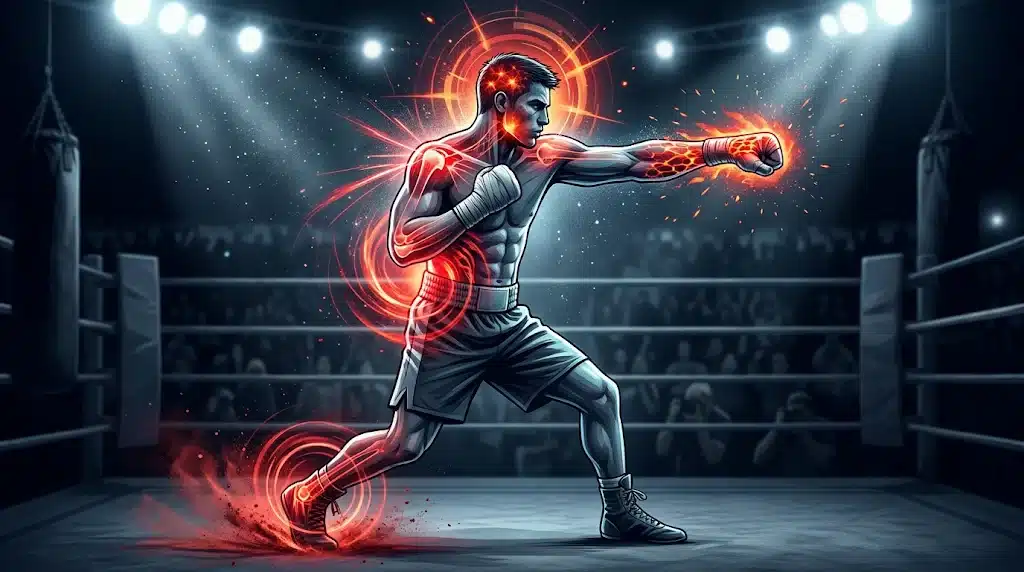
Mastering the ground-up Soviet Kinetic Chain protects your wrists, shoulders, and spine while unlocking explosive punching speed.
Many busy professionals and fitness enthusiasts in Hong Kong want to try Western boxing after work to relieve stress and burn fat, yet one lingering worry often holds them back: "Is boxing safe for complete beginners? If I hit heavy bags and focus mitts every week, won't I end up injuring my wrists, shoulders, or lower back?"
In fact, several students have walked into our studio after trying commercial "high-sweat cardio boxing" classes elsewhere—where instructors simply yelled at them to smash the heavy bag as hard as possible—leaving them with heavy bag wrist pain and nagging neck and shoulder stiffness the very next morning.
The truth is that Olympic boxing is a highly refined biomechanical discipline built on joint alignment, kinetic-chain sequencing, and neuromuscular relaxation. Whether you are a complete beginner stepping into a boxing gym for the first time or an aspiring amateur competitor, nearly all non-contact training injuries stem from three preventable causes: arm-punching with brute tension, improper hand-wrapping and glove selection, and jumping into unstructured sparring without progressive coaching (explore how to start safely in our Beginner's Guide to Learning Boxing in Hong Kong).
Drawing on my experience as a former Hong Kong Olympic Boxing Representative and 2026 Youth Olympic Hong Kong Team Coach—alongside specialized training in Russia under two-time Olympic gold medalist Alexey Tishchenko and Russian national coach Alexie Frolov—this guide breaks down the 5 most common boxing injuries and how Soviet Boxing Science keeps your joints bullet-proof while building effortless power.
1. Why Do Boxers Get Injured? "Arm-Punching" vs. The Soviet Kinetic Chain
Before examining individual joints, every newcomer must understand the single most important biomechanical principle in boxing: the Kinetic Chain.
When untrained beginners put on gloves, their natural instinct is to contract their biceps, anterior deltoids, and upper traps to shove their fist forward (arm-punching). When a fist driven solely by shoulder tension collides with a 40 kg heavy bag, Newton's Third Law sends an equal and opposite shockwave straight back into the small bones of the wrist, the elbow joint, and the rotator cuff. Over weeks of repetition, micro-trauma accumulates into tendinitis and joint strain.
By contrast, Soviet Boxing Science treats the human body as an elastic whip—generating force from the floor upward through three synchronized phases:
- Ground Push-Off & Hip Rotation: Every punch begins when the ball of your foot pushes into the floor and your heel pivots, converting ground-reaction force into rotational hip torque.
- Core Bracing & Kinetic Transfer: Your obliques and deep transverse abdominis brace for a split second at mid-rotation, acting as a rigid bridge that transfers lower-body momentum into the ribcage and scapula without leaking energy through the lumbar spine.
- Relaxed Whip Acceleration & Impact Snap: Your shoulder and arm stay completely loose during extension—accelerating like the tip of a bullwhip—and clench tight for just 0.05 seconds upon impact before immediately relaxing back to guard.
🥊 Coach Chan's Case Study: Fixing Chronic Desk-Shoulder Pain Through Kinetic-Chain Mechanics
"Over eight years of coaching in Lai Chi Kok, I have worked with dozens of Hong Kong professionals who arrived nursing sore wrists or shoulder impingement from unguided heavy-bag workouts. One memorable client was a 34-year-old civil engineer who spent 10 hours a day hunched over CAD drawings, giving him classic rounded shoulders and tight pecs. At his previous gym, he was told to 'hit harder' on the bag, which quickly flared up his front shoulder."
"In our 1-on-1 Private Boxing Classes, we paused heavy power shots for three weeks and rebuilt his foundation from the ground up: neutral spine alignment, rear-heel hip rotation, depressed shoulder blades, and whip-like punch retraction. Within two months, his punches cracked louder on the focus mitts than ever before—and his chronic office neck and shoulder stiffness completely disappeared. Authentic boxing uses structural alignment and rhythm, never brute force."
2. The 5 Most Common Boxing Injuries & Soviet Kinetic-Chain Prevention
Use the tactical reference table below for a quick diagnostic overview of the five highest-risk areas, followed by detailed biomechanical corrections and warm-up protocols for each joint:
| Vulnerable Area | Common Biomechanical Root Cause | Soviet Kinetic-Chain Prevention Fix |
|---|---|---|
| 1. Wrists & Knuckles (Boxer's Knuckle) |
Wrist flexion/extension at impact, striking with ring/pinky knuckles, loose wraps. | Align index & middle knuckles straight with the forearm radius; wrap wrists with 4.5m wraps. |
| 2. Shoulder Joint & Rotator Cuff | Hunching shoulders when fatigued; flaring elbow too high on hooks ("chicken wing"). | Follow "Relax–Snap–Relax" rhythm; keep scapulae depressed and elbow level with fist on hooks. |
| 3. Lumbar Spine & Lower Back | Twisting torso without pivoting the rear heel; arching backward to evade punches. | Pivot rear heel simultaneously with hip rotation; bend knees to drop level instead of leaning back. |
| 4. Knees & Achilles Tendon | Heavy heel-striking footwork; inward knee collapse (knee valgus) during pivots. | Use the elastic Russian Pendulum Step on the balls of the feet; track knees over toes. |
| 5. Elbow Joint (Hyperextension) |
Snapping straight punches to 100% joint lockout during shadow boxing or missed shots. | Maintain a 5% micro-bend buffer at full extension and retract punches along the exact exit path. |
1. Wrists & Knuckles (Heavy Bag Wrist Pain & Boxer's Knuckle)
Root Cause: Your wrists and knuckles absorb the highest peak impact forces in boxing, making heavy bag wrist pain the #1 complaint among self-taught beginners. Three mechanical errors trigger this injury: first, allowing the wrist to buckle downward (flexion) or backward (extension) at the exact moment of bag contact; second, landing punches on the fragile ring and pinky metacarpals instead of the primary striking knuckles; and third, hitting bags without proper wrist stabilization.
- Align Index & Middle Knuckles with Your Radius: At impact, the two large knuckles of your index and middle fingers must form a straight, solid pillar with your forearm bone—eliminating torque across the wrist joint.
- Prioritize Trajectory & Snap Timing Over Raw Force: Beginners should focus on clean punch alignment and clenching the fist 0.05 seconds before contact rather than trying to dent heavy bags before their wrist stabilizers adapt.
- Use 4.5-Meter Elastic Hand Wraps Every Session: Always wrap with full-length 4.5m Mexican-style hand wraps to lock the carpal bones, thumb base, and metacarpals together. In your first session of our Hong Kong Boxing Courses, our coaches demonstrate proper hand-wrapping step by step.
2. Shoulder Joint & Rotator Cuff (Shoulder Impingement Syndrome)
Root Cause: Boxing requires holding a disciplined high guard to protect the chin while throwing dozens of lead jabs and hooks per round. When novices fatigue, they instinctively shrug their shoulders toward their ears or flare their elbow above shoulder height on hooks ("chicken-winging"). This narrows the subacromial space, pinching the supraspinatus tendon of the rotator cuff against the acromion bone.
- Master the Soviet "Relax–Snap–Relax" Cadence: Keep your chin tucked and shoulder blades depressed while in guard—never hold static tension in your deltoids. Fire the punch loosely, snap at impact, and relax immediately.
- Keep Elbow & Fist Horizontal on Hooks: When throwing a lead or rear hook, raise your elbow to the exact horizontal plane of your fist (forming a 90-degree angle) and drive the punch with torso rotation rather than yanking the shoulder socket.
- Pre-Activate Scapular Stabilizers: Include resistance-band external rotations and scapular wall slides during warm-ups to counteract desk-bound pec tightness.
3. Lumbar Spine & Lower Back (Muscle Strain & Disc Shear)
Root Cause: Lower back pain in boxing almost always stems from one mechanical disconnect: rotating the upper torso while the back foot stays glued to the floor. When your feet are planted and your shoulders twist forcefully, rotational shear concentrates directly onto your lumbar vertebrae. Similarly, arching backward from the waist to dodge incoming jabs overloads the spinal erectors.
- Pivot the Rear Heel with Every Cross: Whenever you throw a rear straight punch, pivot your back heel outward so your knee, hip, and spine rotate together as one unified column.
- Bend Your Knees—Never Arch Your Back: When slipping or stepping back out of range, drop your center of gravity by flexing your knees and engaging your abs while keeping your spine neutral.
- Build Anti-Rotation Core Strength: Supplement boxing training with Pallof presses and rotational medicine-ball throws to build a natural muscular corset around your lower spine (learn more in our Boxing Strength & Conditioning Guide).
4. Knees & Achilles Tendon (Ankle Sprains & Patellar Strain)
Root Cause: Although spectators watch the hands, boxing power is dictated by the feet. Beginners who stomp flat-footed on their heels or allow their front knee to cave inward (knee valgus) during sudden pivots place excessive torque on the meniscus, medial collateral ligament (MCL), and Achilles tendon.
- Train the Russian Pendulum Step (Chelnok): Maintain balanced 50/50 weight distribution on the balls of your feet with heels slightly hovering. This elastic spring allows you to glide in and out of range effortlessly while cushioning joint impact.
- Track Knees Over Toes: During every forward step, slip, or 45-degree pivot, ensure your kneecap points in the exact same direction as your toes.
- Warm Up with Jump Rope (Skipping): Five to ten minutes of light skipping before class warms up the plantar fascia, calves, and Achilles tendon elasticity.
5. Elbow Joint (Posterior Elbow Hyperextension)
Root Cause: During solo mirror shadow boxing—or when missing a punch during live drills—throwing a full-power jab or cross without a target to stop the arm can slam the olecranon process of the ulna into the back of the humerus, causing painful posterior elbow inflammation.
- Keep a 5% Micro-Bend Buffer in Shadow Boxing: Never lock your elbow out to 180 degrees when shadow boxing. Use controlled eccentric tension in your biceps and forearms to decelerate the punch just short of full lockout.
- Snap Straight Back to Guard: Train your fist to rebound immediately along its outbound line back to your cheekbone, building crisp "out-and-back" neuromuscular control (refine your mitt mechanics in our Boxing Padwork Training Guide).
3. Is Boxing Safe for Complete Beginners in HK? CKW Boxing's 4 Golden Safety Rules
Proper biomechanics form half of the equation; the other half is training inside an environment designed around structured progression rather than reckless gym culture. At Chan Ka Wa Boxing (CKW Boxing) in Lai Chi Kok, Kowloon, we enforce four non-negotiable safety standards:
- 1. Strict Level 1–2 Safety Gate System (Zero Forced Sparring): Many beginners worry they will be thrown into live sparring before their defense is ready, leading to panic and sloppy mechanics. Under our Two-Tier Student Roadmap, every newcomer (including experienced fitness boxers and martial artists from other styles) and youth beginner aged 8+ starts at Level 1—focusing exclusively on shadow boxing, heavy bags, and 1-on-1 focus mitts with strictly zero forced sparring guaranteed in writing. Only after mastering defensive structure and passing a 3-to-5-minute 1-on-1 coach safety assessment do students unlock Level 2 Technical Classes and supervised Condition Sparring.
- 2. High-Density 12oz–16oz Gloves & Sanitized Loaner Gear: For bag and pad work, we recommend well-padded 12oz to 16oz training gloves to protect your knuckles and wrists. First-time visitors do not need to buy gear upfront—we provide complimentary loaner gloves cleaned and sanitized after every single use.
- 3. Managing Central Nervous System Fatigue: Olympic coaching prioritizes movement quality over mindless exhaustion. When your forearms tighten and punch retraction slows down, your nervous system is signaling fatigue—that is the cue to reset your breathing and shake out tension rather than forcing sloppy reps.
- 4. Dedicated 15-Minute Joint-Prep Warm-Up: Every class opens with targeted mobility drills for the wrists, scapulae, thoracic spine, and hips (looking for a safe, high-burn after-work workout? Explore our Boxing Fitness & Fat-Loss Classes).
4. FAQ: Boxing Injury Prevention & Beginner Training in Hong Kong
Q1: I have slender wrists and zero athletic background—is boxing safe for me to learn?
Yes, completely safe—wrist circumference has nothing to do with injury risk. Wrist stability comes from wrapping properly with 4.5-meter hand wraps and keeping your index and middle knuckles aligned straight with your forearm at impact. Once our coaches teach you the ground-up Soviet kinetic chain at CKW Boxing, even petite beginners and desk-bound office workers can hit pads cleanly without joint pain (also avoid these 7 Fatal Boxing Beginner Mistakes).
Q2: If my knuckles or wrists feel sore after hitting the heavy bag, does that mean I'm punching hard?
No—sore joints are an early warning sign of misaligned impact or loose hand wraps. When you strike a heavy bag with proper kinetic-chain mechanics, you should feel a crisp rebound across your two main knuckles and connected rotational drive from your hips and core—never sharp wrist bending or joint ache. If soreness occurs, stop heavy power shots immediately and ask your coach to check your punch alignment.
Q3: Where is CKW Boxing located in Kowloon, and how do I book an introductory trial session?
Our private reservation-only studio is located at Dr Kong Center, 550 Castle Peak Road, Lai Chi Kok, Kowloon (2–5 minutes' walk from Lai Chi Kok MTR Exit B2). Newcomers enjoy special introductory Trial Session rates: HK$100 for a Group Trial Session or HK$250 for a 1-on-1 Private Assessment Trial (full 60 minutes including posture and kinetic-chain evaluation, regular price HK$800). Complimentary sanitized loaner gloves are included, with strictly zero forced sparring and 100% zero hard-selling (view our Weekly Timetable and Class Pricing).

The Rise of China & Taiwan Boxing: A Former HK Olympian Breaks Down Their Training Systems & Takeaways for Hong Kong
Why are China and Taiwan dominating Asian & Olympic boxing? Former HK Olympian Chan Ka Wa compares their systems and shares 3 tactical takeaways for Hong Kong.

5 Most Common Boxing Injuries & How to Prevent Them Using the Soviet Kinetic Chain — A Former HK Olympian’s Guide
Worried about wrist, shoulder, or lower back pain from boxing? Former HK Olympian Chan Ka Wa explains 5 common boxing injuries and Soviet kinetic-chain fixes.
2026 Nagoya Asian Games Boxing Recap: A Former HK Olympian Breaks Down India’s Rise & Tactical Shifts
India topped the 2026 Nagoya Asian Games boxing medal table while Lin Yu-ting claimed 60kg gold. Former HK Olympian Chan Ka Wa breaks down the tactical shifts.
Youth Olympic Boxing & U19 Worlds: Homegrown CKW Boxing Star Chan Yik Kan’s Road to Africa
How tough is Youth Olympic Boxing? Former HK Olympian & 2026 YOG Coach Chan Ka Wa profiles homegrown CKW Boxing star Chan Yik Kan’s U19 Worlds & Africa campaign.

Why Did Cuban Boxing Fall From Dominance? A Former HK Olympian Breaks Down 4 Hard Truths Behind the Dynasty’s Decline
Why did Cuban boxing lose its Olympic throne? Former HK Olympian Chan Ka Wa breaks down 10-point scoring reforms, Central Asian Soviet evolution & defections.

Is Boxing Violent? A Former HK Olympian Explains 4 Reasons Why Boxing Helps SEN Kids (ADHD, Autism & DCD)
Think boxing is too aggressive for SEN children? Former HK Olympian Chan Ka Wa explains how 1-on-1 focus mitts & Soviet footwork boost focus in ADHD & ASD kids.